Winchester Expedition Big Game 308 Winchester 168 Grain AccuBond Long-Range Ammunition
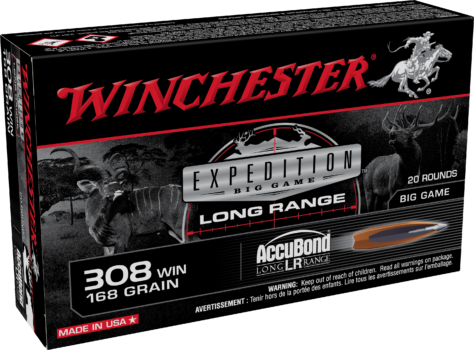
 Ammo Reports Team
| Official Spec | Value |
|---|---|
| Manufacturer | Winchester |
| Cartridge | 308 Winchester |
| Product Line | Expedition Big Game |
| Bullet Name / Type | Nosler AccuBond Long Range – polymer-tipped bonded lead core |
| Bullet Weight | 168 gr |
| SKU / Part Number | S308LR |
| UPC | 020892229839 – retailer-listed |
| Rounds per Box | 20 |
| Muzzle Velocity | 2,680 fps |
| Muzzle Energy | 2,679 ft-lbs |
| Ballistic Coefficient G1 | 0.315 |
| Ballistic Coefficient G7 | Not found |
| Case Material | Brass – retailer-listed |
| Primer | Boxer – retailer-listed |
| Reloadable | Yes – retailer-listed |
| Test Barrel Length | Not found |
| Zero Distance | Not found |
| Sight Height | Not found |
| Intended Use | Big game hunting; long-range hunting |
| Product Status | Current |
| Closest Competitors | Federal Premium Terminal Ascent 308 Win, Hornady Precision Hunter 308 Win, Nosler Trophy Grade 308 Win 168 gr ABLR, Browning BXR 308 Win 155 gr, Barnes VOR-TX 308 Win 168 gr TTSX, Berger Hybrid Hunter 308 Win 168 gr |
Data is based on official manufacturer sources. Found an error? Send us the source link.
Values labeled retailer-listed are retained only where the manufacturer does not publish the identifier or packaging detail.
Ballistics Table
Winchester manufacturer data. No calculated wind values are mixed into this table.
| Yards | Velocity (fps) | Energy (ft-lbs) |
|---|---|---|
| 0 | 2,680 | 2,679 |
The Nosler AccuBond Long Range Bullet
The AccuBond Long Range (ABLR) is a Nosler-designed projectile that Winchester licenses for use in the Expedition Big Game line. It is not the same bullet as the standard AccuBond. The ABLR was engineered specifically to perform at the lower impact velocities typical of extended-range engagements — where conventional bonded bullets can fail to expand reliably. Its polymer tip initiates expansion, a bonded lead core prevents core-jacket separation, and a tapered jacket controls expansion across a wider velocity window than older bonded designs.
For .308 Winchester specifically, this matters because the cartridge sheds velocity relatively quickly compared to larger magnums. A bullet that expands well at 2,000 fps or below gives the .308 meaningful reach on elk-sized game that it would otherwise lack with conventional cup-and-core projectiles. Winchester’s pairing of this bullet with the .308 platform in the Expedition Big Game line reflects a deliberate effort to extend the practical hunting range of a cartridge that is widely available and well-understood by hunters.
Best Uses
Good fit:
- Deer, pronghorn, and black bear hunting at ranges from 100 to 400+ yards in open terrain
- Elk and similar large-bodied North American game where deep penetration and controlled expansion are required
- Hunters already familiar with .308 Winchester who want to extend effective range without changing platforms
- Situations where terminal performance at reduced impact velocity is a concern — late-season shots, angled shots, or shots at distance
- Rifles with 1:10 or 1:11 twist rates that stabilize 168 gr projectiles reliably
Not the right tool for:
- Varmint or predator hunting where rapid fragmentation and minimal pelt damage are priorities
- Short-range brush hunting where a flat-nosed or soft-point design would be more forgiving
- Jurisdictions with lead-free ammunition requirements (this is a lead-core bullet)
- Shooters seeking a high-volume training load; this is a premium-tier hunting load
- Semi-automatic rifles with feeding issues on polymer-tipped bullets (verify function before field use)
Reliability Notes
No structured submissions yet.
Based on manufacturer claims and open-source information: Winchester positions the Expedition Big Game line as a premium hunting series built around high-BC, long-range capable bullets. The AccuBond Long Range bullet used here has been noted in open-source hunting forums and field reports as performing reliably on large game at extended distances when impact velocity remains within the bullet’s documented expansion window. Winchester’s brass cases are generally regarded in open-source communities as consistent and reloadable. No recall or safety notices have been identified for this load as of this writing. All notes here come from manufacturer claims or open sources, not structured performance data.
Competitors
The complete comparison set from the original report is preserved below. Internal links appear only where an exact published Ammo Reports review exists.
| Load | Weight | Bullet | BC G1 | Advertised Velocity | Notes |
|---|---|---|---|---|---|
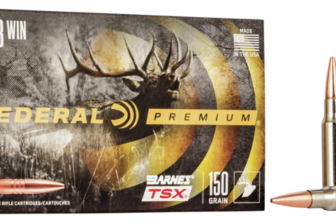
| Federal Premium Terminal Ascent 308 Win | 175 gr | Terminal Ascent (bonded, polymer tip) | Not verified | Not verified | Premium alternative; similar long-range design philosophy |
| Hornady Precision Hunter 308 Win | 178 gr | ELD-X | Not verified | Not verified | Heat Shield tip; slightly higher BC; widely available |
| Nosler Trophy Grade 308 Win 168 gr ABLR | 168 gr | AccuBond Long Range | Not verified | Not verified | Uses the same Nosler ABLR bullet as this Winchester load |
| Browning BXR 308 Win 155 gr | 155 gr | BXR Rapid Expansion | Not verified | Not verified | Budget alternative; lighter, faster, less suited for large game at distance |
| Barnes VOR-TX 308 Win 168 gr TTSX | 168 gr | TTSX (lead-free) | Not verified | Not verified | Lead-free option; required in some hunting zones |
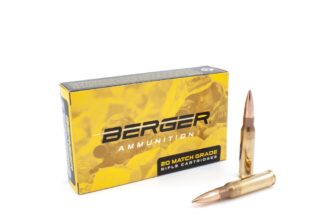
| Berger Hybrid Hunter 308 Win 168 gr | 168 gr | Hybrid Hunter | Not verified | Not verified | High-BC option; may require twist rate verification for stability |
Price and Availability
Retail availability changes by seller, location, and lot. Use the retailer links above to check current stock and checkout totals.
Where to Buy
Confirm the exact SKU and package quantity before ordering.
FAQ
Does the AccuBond Long Range bullet in this load perform differently than the standard AccuBond?
Yes — the AccuBond Long Range is a distinct Nosler design, not an updated version of the standard AccuBond. The ABLR uses a more aggressive secant ogive for a higher ballistic coefficient and a jacket taper engineered to expand at lower impact velocities, typically down to around 1,800 fps. The standard AccuBond is optimized for a narrower, higher-velocity impact window. For .308 Winchester used at extended ranges, the ABLR’s wider expansion velocity range is a meaningful practical advantage over the standard design.
How does this load compare to the Nosler Trophy Grade 308 Win 168 gr AccuBond Long Range?
Both loads use the same Nosler AccuBond Long Range 168 gr projectile, which is the most direct point of comparison. The primary differences lie in the brass, primer, and powder charge chosen by each manufacturer, which can result in slightly different muzzle velocities and pressure curves. Neither Winchester nor Nosler has published side-by-side velocity data for these two loads, so practical field performance differences are difficult to quantify without independent chronograph testing. Pricing tends to be similar, making availability and brand preference the most common deciding factors for buyers choosing between them.
Is this ammunition legal for hunting in lead-free zones such as California?
No. The AccuBond Long Range is a bonded lead-core bullet and does not qualify as non-toxic or lead-free under California’s Condor Zone regulations or similar state-level restrictions. Hunters required to use lead-free ammunition should consider alternatives such as the Barnes VOR-TX 308 Win 168 gr TTSX or similar all-copper or copper-alloy projectile loads. Always verify current regulations with the relevant wildlife agency before selecting ammunition for a specific hunt.
What barrel length was used to establish the advertised performance of this load?
Winchester has not published muzzle velocity data for this load as of this writing, so the test barrel length is also unknown. Most rifle ammunition manufacturers use a 24-inch test barrel as the standard for .308 Winchester velocity measurements. Hunters using rifles with 18–22 inch barrels should expect measurably lower muzzle velocity — typically 25–50 fps per inch of barrel lost — which will affect both trajectory and retained energy at distance.
Is this load suitable for elk hunting at 400 yards with a .308 Winchester?
This is a realistic use case for which this load was designed, but it requires honest assessment of conditions. At an estimated 400-yard impact velocity near 1,900–2,000 fps, the AccuBond Long Range bullet is designed to expand reliably and retain high weight retention for deep penetration on elk-sized game. However, the .308 Winchester’s energy at that range — estimated near 1,400 ft-lbs — is at or near the lower threshold many experienced hunters consider adequate for elk. Shot placement becomes critically important at these distances, and hunters should confirm their specific rifle’s actual muzzle velocity before making long-range holds based on estimated ballistic tables.