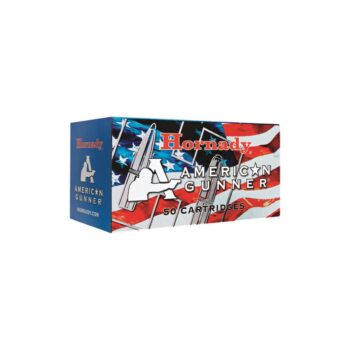
Hornady American Gunner 300 Blackout 125 Grain HP Match
 Ammo Reports Team


| Official Spec | Value |
|---|---|
| Manufacturer | Hornady |
| Cartridge | 300 Blackout |
| Product Line | American Gunner |
| Bullet Name / Type | HP Match |
| Bullet Weight | 125 gr |
| SKU / Part Number | 80897 |
| UPC | Not found |
| Rounds per Box | 50 |
| Muzzle Velocity | 2175 fps |
| Muzzle Energy | 1313 ft-lbs |
| Ballistic Coefficient G1 | Not found |
| Ballistic Coefficient G7 | Not found |
| Case Material | Not found |
| Primer | Not found |
| Reloadable | Not found |
| Test Barrel Length | 16 in |
| Zero Distance | 200 yd |
| Sight Height | Not found |
| Intended Use | Target shooting, training, and competition |
| Product Status | Current product listing verified |
| Closest Competitors | Hornady Black .300 BLK 110 gr V-MAX, Hornady Black .300 BLK 125 gr FMJ, Federal American Eagle .300 BLK 150 gr FMJ, Sig Sauer Elite .300 BLK 125 gr OTM, Barnes Precision Match .300 BLK 125 gr OTM, Remington UMC .300 BLK 120 gr OTFB |
Data is based on official manufacturer sources. Found an error? Send us the source link.
Manufacturer: Hornady. Exact official product pages and technical documents are recorded in the editorial verification log. Any retailer-listed field is labeled.
Ballistics Table
| Yards | Velocity (fps) | Energy (ft-lbs) | Trajectory (in) |
|---|---|---|---|
| Muzzle | 2175 | 1313 | -1.5 |
| 100 | 1932 | 1036 | 4.0 |
| 200 | 1708 | 810 | 0.0 |
| 300 | 1505 | 609 | -15.9 |
| 400 | – | – | – |
| 500 | – | – | – |
Official-data note: Hornady publishes velocity, energy, and trajectory through 300 yards for a 200-yard zero from a 16-inch test barrel. Wind drift is not shown.
Key takeaway: The correct Hornady item number is 80897, not 80873. Hornady lists 2175 fps and 1313 ft-lbs at the muzzle.
Related 300 Blackout factory loads on Ammo Reports: Federal American Eagle 150 Gr FMJ, Hornady Custom 110 Grain CX, and Hornady Subsonic 190 Gr Sub-X.
The HP Match Bullet in .300 BLK Context
The HP Match designation in this load refers to a hollow point bullet designed primarily for accuracy and consistent in-flight stability rather than terminal expansion engineered for hunting or defensive duty. In supersonic .300 AAC Blackout loads, open-tip match bullets are a common choice because the manufacturing process — seating the core from the tip — produces extremely consistent ogive geometry, which translates directly to tighter groups at distance.
It is worth clarifying a common point of confusion: HP Match bullets are not the same as defensive hollow points. The cavity geometry in a match HP is not optimized for reliable hydraulic expansion at handgun velocities or for meeting FBI protocol standards. This matters for buyers who may be drawn to the “hollow point” label expecting defensive terminal performance comparable to purpose-built expanding bullets like the Hornady Critical Defense or similar loads. For competition and range use, this distinction is irrelevant — the bullet does exactly what it is designed to do.
The American Gunner line was developed by Hornady to bring match-grade consistency to a more accessible price tier, making this load a practical choice for high-volume shooters who want tighter groups without paying for premium match-box pricing.
Best Uses
Good fit:
- 100-yard precision target shooting and group testing on an AR-15 platform chambered in .300 BLK
- Competitive shooting disciplines where supersonic .300 BLK is required or preferred
- Function testing and accuracy evaluation of .300 BLK builds
- High-volume range practice where consistent bullet geometry matters for feedback
- General-purpose supersonic plinking with a 125 gr HP Match projectile
Not the right tool for:
- Suppressed subsonic applications — this is a supersonic load and will not cycle reliably in subsonic-tuned setups
- Hunting applications where controlled terminal expansion is legally required or ethically necessary
- Self-defense use where purpose-built defensive ammunition with tested expansion data is the appropriate choice
- Shooters who need published velocity and BC data for precise ballistic calculations — this load lacks manufacturer-published specs
Reliability Notes
No structured submissions yet.
Hornady publishes the item number, bullet weight and type, box count, muzzle figures, and factory trajectory for this load. Case material, primer type, reloadable status, and structured Ammo Reports function submissions were not found in the verified material, so this review does not infer them.
Competitors
This is the full comparison set preserved from the article’s existing competitor list. A link is added only when an exact Published review exists on Ammo Reports. Unverified competitor fields are labeled accordingly.
| Competitor | Bullet Type | Weight | Muzzle Velocity | Primary Use |
|---|---|---|---|---|
| Hornady Black .300 BLK 110 gr V-MAX | V-MAX Polymer Tip – Not verified | 110 gr – Not verified | Not verified | Not verified |
| Hornady Black .300 BLK 125 gr FMJ | Full Metal Jacket – Not verified | 125 gr – Not verified | Not verified | Not verified |
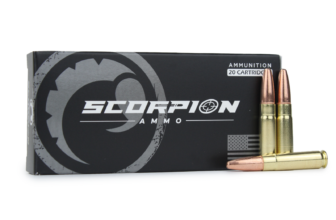
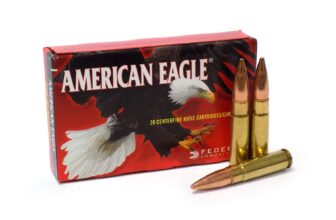
| Federal American Eagle .300 BLK 150 gr FMJ | Full Metal Jacket Boat-Tail | 150 gr | 1900 fps | Competition, target shooting, and training |
| Sig Sauer Elite .300 BLK 125 gr OTM | Open Tip Match – Not verified | 125 gr – Not verified | Not verified | Not verified |
| Barnes Precision Match .300 BLK 125 gr OTM | Open Tip Match – Not verified | 125 gr – Not verified | Not verified | Not verified |
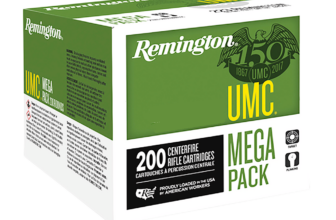
| Remington UMC .300 BLK 120 gr OTFB | Open Tip Flat Base – Not verified | 120 gr – Not verified | Not verified | Not verified |
Price Reality
Retail prices and availability change. Compare the current store listings below and verify SKU 80897 and the exact 50-round package before purchase. Price is not used to determine the technical data or editorial conclusion.
Where to Buy
Affiliate links. These do not influence ratings, data, or any editorial content on this page.
FAQ
What is the correct item number for this load?
Hornady lists this load as item 80897.
What factory velocity does Hornady publish?
Hornady lists 2,175 fps and 1,313 ft-lbs from a 16-inch test barrel.
How many rounds are in a box?
Hornady lists 50 rounds per box.
Is this item 80873?
No. Item 80873 is a different 110 gr V-MAX load.
What zero does the factory trajectory use?
The trajectory uses a 200-yard zero.