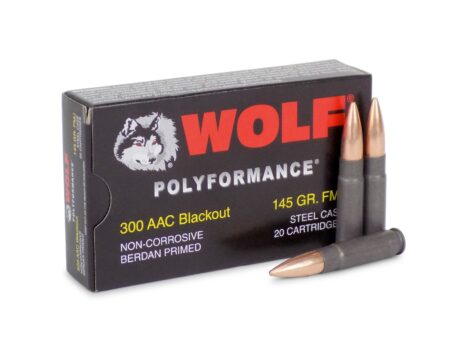
 Ammo Reports Team
| Official Spec | Value |
|---|---|
| Manufacturer | Wolf Performance Ammunition |
| Cartridge | 300 Blackout |
| Product Line | Polyformance |
| Bullet Name / Type | Bimetal-jacket FMJ |
| Bullet Weight | 145 gr |
| SKU / Part Number | Not found |
| UPC | Not found |
| Rounds per Box | Not found |
| Muzzle Velocity | Not found |
| Muzzle Energy | Not found |
| Ballistic Coefficient G1 | Not found |
| Ballistic Coefficient G7 | Not found |
| Case Material | Polymer-coated steel |
| Primer | Berdan |
| Reloadable | Not found |
| Test Barrel Length | Not found |
| Zero Distance | Not found |
| Sight Height | Not found |
| Intended Use | High-volume target shooting and training |
| Product Status | Current status not independently confirmed |
| Closest Competitors | Barnaul 300 Blackout 145gr FMJ, Hornady BLACK 300 Blackout 110gr V-MAX, Remington UMC 300 Blackout 220gr OT, Sellier & Bellot 300 Blackout 147gr FMJ, Federal American Eagle 300 Blackout 150gr FMJ, Hornady BLACK 300 Blackout 208gr A-MAX |
Data is based on official manufacturer sources. Found an error? Send us the source link.
Manufacturer: Wolf Performance Ammunition. Exact official product pages and technical documents are recorded in the editorial verification log. Any retailer-listed field is labeled.
Ballistics Table
| Yards | Velocity (fps) | Energy (ft-lbs) | Trajectory (in) |
|---|---|---|---|
| Muzzle | – | – | – |
| 100 | – | – | – |
| 200 | – | – | – |
| 300 | – | – | – |
| 400 | – | – | – |
| 500 | – | – | – |
Official-data note: A verified exact-load factory ballistic table was not available during this review. Estimated values have been removed.
Key takeaway: The verified product identity is a 145 gr bimetal-jacket FMJ load with a polymer-coated steel case and Berdan primer.
Related 300 Blackout factory loads on Ammo Reports: Federal American Eagle 150 Gr FMJ, Hornady Custom 110 Grain CX, and Hornady Subsonic 190 Gr Sub-X.
Steel-Cased Construction and Magnetic Bullet Considerations
Wolf Polyformance ammunition uses a polymer-coated steel case rather than brass. The coating serves as a lubricant substitute to ease extraction in semi-automatic chambers. The bullet itself is bimetal — a lead core with a copper-washed steel jacket — which means it will attract a magnet. This is a critical distinction for range use: many indoor ranges in the United States prohibit bimetal or steel-jacketed projectiles due to fire risk from sparks against steel backstops. Before use, confirm the range’s current policy on magnetic or steel-jacketed projectiles and check the rules that apply in the relevant jurisdiction. This review does not make a legal classification; Wolf describes the projectile as a bimetal-jacket FMJ.
Best Uses
Good fit:
- High-volume range training where per-round cost is the primary driver
- Outdoor range sessions where steel-jacketed bullets are permitted
- Carbine drills, position shooting, and 300 Blackout platform function testing
- Competitors running large round counts in practice and needing an affordable supersonic load
- Shooters breaking in a new 300 BLK upper and wanting to confirm cycling before switching to premium ammunition
Not the right tool for:
- Indoor ranges with steel-backstop facilities that prohibit magnetic projectiles
- Hunting applications that call for a controlled-expansion bullet; verify the applicable regulations before use
- Suppressed shooting where subsonic 300 Blackout performance is the objective (this is a supersonic load)
- Precision or long-range work where published BC data and verified velocity are required
- Shooters whose rifles have match chambers with tight tolerances that may not feed steel-cased ammunition reliably
Reliability Notes
No structured submissions yet.
From manufacturer claims and open sources, not structured data: Wolf describes this load as designed for consistent performance in semi-automatic platforms. The polymer coating on the steel case is intended to reduce friction during feeding and extraction compared to bare steel, which historically caused more wear concerns. Open-source user observations suggest that gas-impingement AR-platform rifles in 300 Blackout generally cycle this ammunition without issue, though some users note that rifles with very tight chambers or aggressive extractor springs may experience occasional extraction stiffness — a characteristic common to steel-cased ammunition across all calibers, not specific to this load. Bolt-action users report no extraction difficulties. No recall or safety notice is associated with this product at time of publication.
Competitors
This is the full comparison set preserved from the article’s existing competitor list. A link is added only when an exact Published review exists on Ammo Reports. Unverified competitor fields are labeled accordingly.
| Competitor | Bullet Type | Weight | Muzzle Velocity | Primary Use |
|---|---|---|---|---|
| Barnaul 300 Blackout 145gr FMJ | FMJ, bimetal – Not verified | 145 gr – Not verified | Not verified | Not verified |
| Hornady BLACK 300 Blackout 110gr V-MAX | V-MAX polymer tip – Not verified | 110 gr – Not verified | Not verified | Not verified |
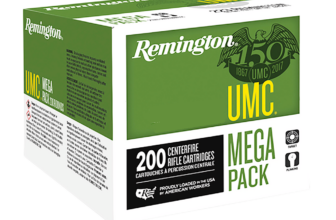
| Remington UMC 300 Blackout 220gr OT | Open Tip (subsonic) – Not verified | 220 gr – Not verified | Not verified | Not verified |
| Sellier & Bellot 300 Blackout 147gr FMJ | Full Metal Jacket | 147 gr | 2077 fps | Range, match, competition, and training |
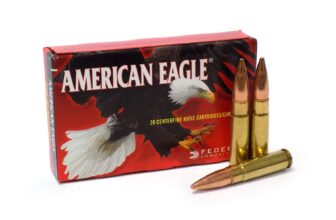
| Federal American Eagle 300 Blackout 150gr FMJ | Full Metal Jacket Boat-Tail | 150 gr | 1900 fps | Competition, target shooting, and training |
| Hornady BLACK 300 Blackout 208gr A-MAX | A-MAX (subsonic) – Not verified | 208 gr – Not verified | Not verified | Not verified |
Price Reality
Retail prices and availability change. Compare the current store listings below and verify SKU Not found and the exact package before purchase. Price is not used to determine the technical data or editorial conclusion.
Where to Buy
Affiliate links. These do not influence ratings, data, or any editorial content on this page.
FAQ
Is this brass-cased?
No. Wolf identifies a polymer-coated steel case.
Is the primer Boxer or Berdan?
It uses a Berdan primer.
What does Wolf state about reloadability?
Reloadable status was not found in verified official material. Wolf does list a polymer-coated steel case and Berdan primer.
Why are there no ballistic numbers?
An exact-load manufacturer table could not be verified, so estimates were removed.
Can the bullet attract a magnet?
Yes. A bimetal jacket can attract a magnet.