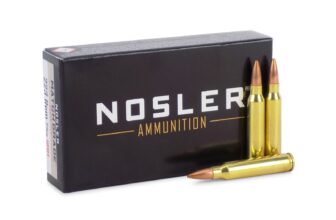
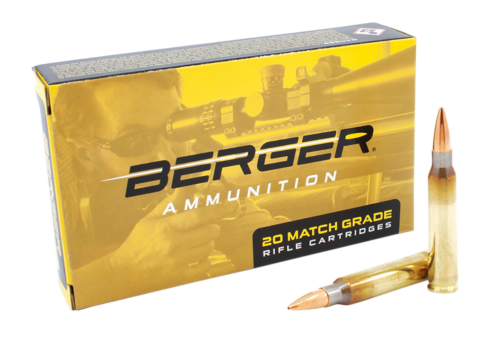
Berger Target 223 Remington 73 Grain Boat Tail
| Feature | Detail |
|---|---|
| Primary Use | Competitive target shooting, precision rifle, high-power matches |
| Bullet Type | Berger 73 Grain Boat Tail Target (open tip match) |
| Bullet Weight | 73 grains |
| Case Material | Brass |
| Primer Type | Boxer (centerfire) |
| Packaging | 20 rounds per box |
| Typical Price | $43.49/box โ $2.17/round |
| Closest Competitors | Hornady 75 gr BTHP Match (.223 Rem), Federal Gold Medal 77 gr Sierra MatchKing (.223 Rem), Black Hills 77 gr Sierra MatchKing (.223 Rem) |
Official Specs
| Spec | Value | Source |
|---|---|---|
| Muzzle Velocity (fps) | โ | Not published |
| Muzzle Energy (ft-lbs) | โ | Not published |
| Bullet Weight | 73 gr | Manufacturer |
| Bullet Type | Boat Tail Target (Open Tip Match) | Manufacturer |
| BC G1 | โ | Not published |
| BC G7 | โ | Not published |
| Manufacturer SKU | โ | Not published |
| UPC | โ | Not published |
| Reloadable | Yes | Brass case, Boxer primer |
Note on missing velocity and energy: Berger does not publish muzzle velocity or muzzle energy for this factory load in publicly available documentation. These figures will vary meaningfully with barrel length โ the 73 gr projectile is optimized for 1:8 or faster twist rates and longer match barrels, which complicates a single representative figure. Community-submitted chronograph data will be added here as it becomes available.
Note on BC values: Berger publishes G1 and G7 BC data for their component bullets. The 73 gr Boat Tail component bullet carries a G1 BC of approximately 0.395 and a G7 BC of approximately 0.200 per Berger’s bullet data resources. However, these figures apply to the component projectile; Berger has not confirmed identical values for this factory-loaded ammunition. They are listed here as reference only and are not carried into the ballistics table calculations.
Ballistics Table
Calculated estimate. Muzzle velocity is not manufacturer-published for this load. The table below uses an assumed muzzle velocity of 2,950 fps โ a conservative estimate consistent with a 73 gr .224-caliber match bullet from a 24-inch test barrel. Real-world results vary by barrel length, temperature, altitude, and lot. Community submissions will provide measured muzzle velocity for comparison.
Zero: 100 yards | Sight height: 1.5″ above bore | BC G7: 0.200 (Berger component reference)
| Yards | Velocity (fps) | Energy (ft-lbs) | Trajectory (in) |
|---|---|---|---|
| 0 | ~2,950 | ~1,412 | -1.5 |
| 100 | ~2,714 | ~1,195 | 0.0 โ zero |
| 200 | ~2,487 | ~1,003 | -3.5 |
| 300 | ~2,270 | ~836 | -13.2 |
| 400 | ~2,064 | ~690 | -30.5 |
| 500 | ~1,868 | ~566 | -57.4 |
All values preceded by ~ are calculated estimates, not manufacturer-published data.
Key takeaway: The 73 grain boat tail projectile retains velocity well through 300 yards, making it a capable choice for mid-range precision work at 100โ300 yard target distances common in NRA High Power and similar disciplines. Wind deflection โ not shown here โ is the dominant variable at 400โ500 yards with this bullet weight, and shooters should expect meaningful drift in crosswind conditions. The relatively high bullet weight for the .223 Remington case means this load is best suited to rifles with 1:8″ or faster twist rates to achieve stable flight. Shorter barrels (16″ and under) will produce noticeably lower velocities than the estimates shown.
The Berger 73 Grain Boat Tail in Factory Form
Berger Bullets built its reputation on component projectiles before entering the factory ammunition market. The 73 grain boat tail occupies a specific niche in the .223 Remington performance window โ heavier than the common 69 gr match bullets used in service rifle competition, but lighter than the 77 gr projectiles that have become standard in long-range .223 Rem applications.
The boat tail geometry reduces base drag during the transonic transition, and the open tip match construction โ sometimes called OTM โ is a byproduct of the pointing die manufacturing process rather than a designed expansion feature. This is a non-expanding target bullet by design. At 73 grains, this load pushes near the upper boundary of what standard .223 Remington chamber pressure and case capacity can efficiently drive, which is why muzzle velocity is modest compared to lighter .223 loads. The tradeoff is a higher sectional density and improved retained energy downrange relative to 55 or 62 grain alternatives.
Berger’s factory ammunition program is positioned to give competitive shooters access to the same match-grade components the company sells separately, assembled under controlled conditions. This load is not intended for defensive use, hunting, or barrier penetration โ it is a purpose-built precision range round.
Best Uses
Good fit:
- NRA High Power and similar service rifle or match rifle competitions at 100โ300 yard stages
- Precision rifle practice where consistent bullet-to-bullet uniformity matters more than terminal performance
- Shooters evaluating the 73 gr boat tail for handloading who want a factory baseline for comparison
- Bolt-action and AR-platform rifles with 1:8″ or 1:7″ twist barrels and 20โ24 inch barrels
- Indoor or outdoor benchrest practice at 100 and 200 yards
Not the right tool for:
- Hunting โ this is a non-expanding target bullet; it is not appropriate for ethical deer, hog, or varmint hunting where terminal performance matters
- Rifles with 1:12″ or 1:9″ twist rates โ the 73 gr weight requires faster stabilization and may not stabilize reliably in slower-twist barrels
- Short-barreled rifles (under 18″) where velocity loss will be significant
- Defensive or duty use โ no expansion, no bonding, not designed for barrier defeat
- Budget-conscious range practice where cost per round is a primary concern โ at $2.17/round, this is a premium product
Reliability Notes
No structured submissions yet.
Based on manufacturer claims and open-source product descriptions, the following constructive observations are available:
- Berger states that each cartridge is assembled using precision machinery and premium-grade components, consistent with their component bullet manufacturing standards. This is a manufacturer claim, not independently verified structured data.
- The open tip match construction is manufactured to the same tolerances as Berger’s standalone component bullets, which have a documented track record in competitive shooting circles. This is open-source community observation, not structured submission data.
- Brass case and Boxer primer construction allows for reloading after first firing, which is relevant to competitive shooters who track case life carefully.
- No documented recall, safety notice, or widespread lot-specific quality issue has been identified for this load at the time of publication.
Competitors
| Load | Weight | Bullet | BC G1 | Muzzle Velocity | Price/Box (approx.) | Notes |
|---|---|---|---|---|---|---|
| Hornady Match 75 gr BTHP | 75 gr | Boat Tail HP | 0.395 | 2,790 fps | ~$28โ$34 | Budget alternative; widely available; similar bullet weight class |
| Federal Gold Medal 77 gr Sierra MatchKing | 77 gr | BTHP (SMK) | 0.372 | 2,720 fps | ~$30โ$38 | Industry benchmark for .223 Rem match; heavier bullet, slightly lower velocity |
| Black Hills 77 gr Sierra MatchKing | 77 gr | BTHP (SMK) | 0.372 | 2,750 fps | ~$35โ$42 | Premium alternative; uses same SMK projectile as Federal GM; respected in service rifle competition |
| Nosler Match Grade 77 gr HPBT | 77 gr | HPBT Custom Competition | 0.390 | 2,750 fps | ~$38โ$45 | Premium tier; comparable price point to Berger; heavier bullet |
| Winchester USA Ready 73 gr OTM | 73 gr | Open Tip Match | ~0.370 | 2,790 fps | ~$24โ$30 | Same bullet weight; budget-to-mid tier; not the same bullet construction as Berger |
Note: BC and velocity figures for competitor loads are sourced from manufacturer published data where available. Prices are approximate retail ranges and will vary. No competitor loads in this table have an active recall at time of publication.
Price Reality
- Typical retail price: $43.49 per 20-round box, approximately $2.17 per round
- Case pricing: No standard case quantity pricing has been identified for this load at time of publication
- Per-round comparison:
- Hornady Match 75 gr BTHP runs approximately $1.40โ$1.70/round โ roughly $0.47โ$0.77 less per round
- Federal Gold Medal 77 gr SMK runs approximately $1.50โ$1.90/round
- Black Hills 77 gr SMK runs approximately $1.75โ$2.10/round โ the closest price competitor
- Fair price benchmark: At $2.17/round, this load sits at the top of the .223 Rem factory match segment. Paying above $2.40/round for a 20-round box would represent a meaningful premium over typical retail. Buyers who find this load significantly above $45/box should compare current listings before purchasing.
- The Berger brand premium reflects the component bullet reputation; whether that premium is justified depends on whether the shooter’s accuracy requirements demand it over Hornady or Federal alternatives at lower cost.
Prices change. Check the Where to Buy block for current listings.
Where to Buy
Berger Target 223 Remington 73 Grain Boat Tail (Box)
Affiliate links. These do not influence ratings, data, or any editorial content on this page.
FAQ
Does the 73 grain boat tail bullet in this load expand on impact?
No. The Berger 73 gr Boat Tail Target is an open tip match (OTM) projectile, and the open tip is a manufacturing artifact, not a designed expansion mechanism. The bullet is built for consistent flight and accuracy, not terminal expansion. It should not be used for hunting where controlled expansion is required for ethical kills. Shooters sometimes confuse OTM and hollow point hunting bullets โ they are not interchangeable in function.
What twist rate does my rifle need to stabilize the 73 grain bullet?
A 1:8″ or faster twist rate is generally required to stabilize a 73 grain .224-caliber bullet reliably. A 1:9″ barrel may marginally stabilize this bullet depending on muzzle velocity and environmental conditions, but it is not recommended. The common 1:12″ twist found in older .223 Remington rifles will not stabilize this bullet at all. If your rifle has a 1:7″ or 1:8″ twist โ common in AR-platform rifles built for heavier match bullets โ this load is a natural fit.
How does the Berger 73 gr compare directly to the Hornady 75 gr BTHP Match?
Both loads target the same competitive shooting application with similar bullet weights and boat tail construction. The Hornady 75 gr BTHP is two grains heavier and generally priced $10โ$15 less per box, making it the dominant budget-to-mid-tier alternative. The Berger load uses a projectile manufactured under Berger’s own tolerances, which some competitive shooters prefer for consistency. Whether the accuracy difference is measurable at the distances most shooters engage is a legitimate question โ both loads are capable of sub-MOA performance in appropriate rifles.
Is this load legal for NRA High Power or CMP competition?
Open tip match bullets are generally permitted in NRA High Power and CMP competitions, but rules vary by match category and division. The 73 grain weight falls within typical service rifle and match rifle weight limits for .223 Remington. Shooters should verify current rulebooks for their specific division before purchasing match ammunition, as rules are updated periodically and some matches impose bullet weight or construction restrictions.
Why doesn’t Berger publish muzzle velocity for this factory load?
Berger does not prominently publish muzzle velocity data for this load in widely available product documentation โ a gap that is not uncommon among boutique match ammunition producers. Muzzle velocity varies significantly with barrel length, and publishing a single figure from a 24-inch test barrel could mislead shooters using 18″ or 20″ barrels. Berger’s focus is on bullet consistency rather than velocity benchmarks, which reflects the competitive shooting philosophy that accuracy and uniformity matter more than raw speed at the distances this load is designed for.