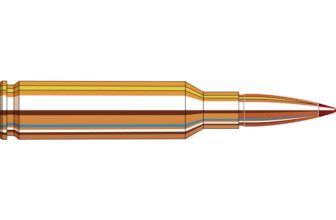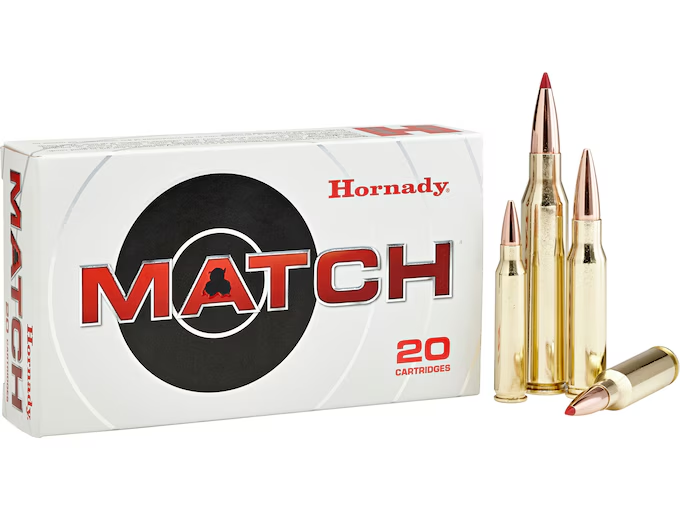
Hornady Match 6.5 Creedmoor 120 gr ELD Match

 Ammo Reports Team


| Official Specification | Value |
|---|---|
| Manufacturer | Hornady |
| Cartridge | 6.5 Creedmoor |
| Product Line | Match |
| Bullet Name / Bullet Type | ELD Match |
| Bullet Weight | 120 gr |
| SKU / Part Number / Item Number | 81491 |
| UPC | 090255814910 |
| Rounds per Box | 20 |
| Muzzle Velocity | 2,910 fps |
| Muzzle Energy | 2,256 ft-lb |
| Ballistic Coefficient G1 | 0.486 |
| Ballistic Coefficient G7 | 0.245 |
| Case Material | Brass |
| Primer | Not found |
| Reloadable | Yes |
| Test Barrel Length | 24 in |
| Zero Distance | 200 yd |
| Sight Height | Not found |
| Intended Use | Precision target shooting and competition |
| Product Status | Current |
| Closest Competitors | Hornady Match 6.5 Creedmoor 140 gr ELD Match; Hornady Match 6.5 Creedmoor 147 gr ELD Match; PPU Supreme 6.5 Creedmoor 140 gr Sierra MatchKing HPBT; Hornady American Gunner 6.5 Creedmoor 140 gr BTHP; Federal Gold Medal 6.5 Creedmoor 140 gr Open Tip Match |
Data is based on official manufacturer sources. Found an error? Send us the source link.
Official Ballistics
Hornady publishes the following data for this exact 81491 load from a 24-inch test barrel with a 200-yard zero. Wind drift is omitted because Hornady does not publish an exact wind table for this product.
| Distance (yd) | Velocity (fps) | Energy (ft-lb) | Trajectory (in) |
|---|---|---|---|
| 0 | 2,910 | 2,256 | -1.5 |
| 100 | 2,719 | 1,969 | +1.6 |
| 200 | 2,535 | 1,713 | 0.0 |
| 300 | 2,359 | 1,483 | -7.0 |
| 400 | 2,190 | 1,278 | -20.3 |
| 500 | 2,028 | 1,096 | -40.8 |
Official Hornady product and ballistics source.
Product Overview
Hornady Match 120 gr ELD Match is a comparatively light 6.5 Creedmoor match load. Its Heat Shield tip, AMP jacket, and secant-ogive profile are intended to provide consistent drag and match-grade accuracy.
Best Uses
- Precision rifle practice and competition
- Shooters who prefer lower recoil than common 140-147 gr match loads
- Rifles that group well with 120 gr projectiles
Reliability Notes
- Treat the published 2,910 fps as a 24-inch test-barrel reference, not a guaranteed rifle velocity.
- The official trajectory uses a 200-yard zero; verify the actual zero and come-ups in the individual rifle.
- Match ammunition can be accurate across many rifles, but lot and chamber differences still require confirmation.
Competitors
| Load | Weight | Bullet | BC (G1) | Muzzle Velocity | Comparison |
|---|---|---|---|---|---|
| Hornady Match 6.5 Creedmoor 140 gr ELD Match | 140 gr | ELD Match | 0.646 | 2,710 fps | Heavier Hornady match option |
| Hornady Match 6.5 Creedmoor 147 gr ELD Match | 147 gr | ELD Match | 0.697 | 2,695 fps | Highest-BC Hornady option in this group |
| PPU Supreme 6.5 Creedmoor 140 gr Sierra MatchKing HPBT | 140 gr | Sierra MatchKing HPBT | 0.617 | 2,690 fps | Traditional 140 gr match alternative |
| Hornady American Gunner 6.5 Creedmoor 140 gr BTHP | 140 gr | BTHP Match | 0.580 | 2,690 fps | 50-round practice and match option |
| Federal Gold Medal 6.5 Creedmoor 140 gr Open Tip Match | 140 gr | Sierra MatchKing OTM | 0.617 | 2,650 fps | Federal match alternative |
FAQ
What is the Heat Shield tip and why does it matter for accuracy?
Hornady discovered using Doppler radar that standard polymer bullet tips deform due to aerodynamic heating at high velocities — typically above Mach 1.5 in flight. A deformed tip changes the bullet’s ballistic coefficient mid-flight, causing velocity inconsistency and vertical dispersion at long range. Standard BTHP bullets avoid tip deformation but sacrifice the aerodynamic advantage of a tipped design. Hornady’s Heat Shield tip is a heat-resistant polymer formulation that maintains its shape through flight regardless of velocity, providing both the aerodynamic BC advantage of a tip and the consistency of a BTHP. This is the core engineering innovation that differentiates ELD Match from previous Hornady match designs.
120 gr ELD Match vs 140 gr ELD Match — which should I use for PRS competition?
For PRS and NRL competition, the 140 gr ELD Match is typically the stronger choice for its higher BC (0.646 vs 0.486). At competition distances of 300–800 yards the BC difference produces meaningfully less wind drift and drop — at 600 yards the 140 gr may drift 2–3 fewer inches in a 10 mph crosswind. The 120 gr’s velocity advantage (200 fps at the muzzle) is essentially equalized by 250–300 yards where BC begins to dominate. For indoor matches or stages capped at 300–400 yards, the 120 gr’s near-range flatness is a legitimate choice. For open-format PRS with 500–1,000 yard stages, the 140 gr is the better tool.
Is the ELD Match appropriate for deer hunting?
No — ELD Match is specifically engineered for accuracy, not terminal expansion. The Heat Shield tip and precision jacket are optimized to maintain the bullet’s ballistic profile, not to initiate controlled expansion on game. Hornady explicitly distinguishes ELD Match (match only) from ELD-X (designed for hunting). For hunting in 6.5 CM, Hornady makes the Precision Hunter 143 gr ELD-X, which uses a similar tip and jacket design tuned for terminal expansion on game from close range through 500+ yards.
How does Hornady’s velocity-dependent BC system work?
Hornady now publishes BC values at specific Mach numbers rather than a single average figure. The 120 gr ELD Match has a higher G1 BC at higher velocities (leaving the muzzle) and a lower BC as velocity drops (at extended range). The 0.486 G1 value represents a practical average across typical shooting velocities. Hornady’s website (hornady.com/bc) provides the full velocity-dependent BC table for precise long-range trajectory calculations. For practical shooting inside 500 yards, the 0.486 value is adequate for trajectory planning.
Submit Your Data · Real-World Results
Manufacturer velocity figures are measured under controlled lab conditions — barrel length, temperature, and lot number all affect real-world performance. The data below comes from community submissions tied to specific test conditions and reviewed before publishing.
Once this page reaches 3 approved submissions, aggregate velocity and confidence level will appear here automatically.
| UPC # | Firearm | Barrel (in) | Avg Velocity (fps) | Shots | Temp (°F) | Chronograph | Lot | Notes |
|---|---|---|---|---|---|---|---|---|
| 090255814910 | — | — | — | — | — | — | — | No data yet |
Shot this load? Share your results — firearm type, barrel length, average velocity, shots fired, temperature. No account required.
ES and SD data are especially valuable for this premium match load — include them in Notes if your chronograph captures them.
All submissions are manually reviewed before appearing on this page.
You need to login first.Results vary by firearm, barrel condition, ammunition lot, and environmental factors. Submitted data is for reference only. AmmoReports does not guarantee accuracy of user-submitted results.
Last updated: April 2026 · Data confidence: Low (0 submissions) · Specs verified against Hornady official ballistics chart (24″ barrel). BC from Hornady metric chart (velocity-averaged).