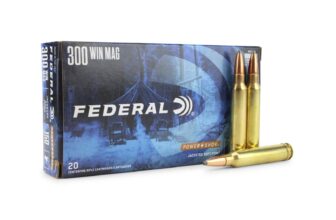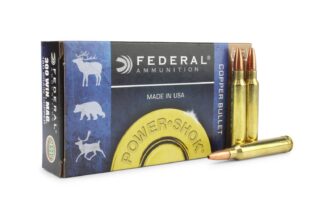
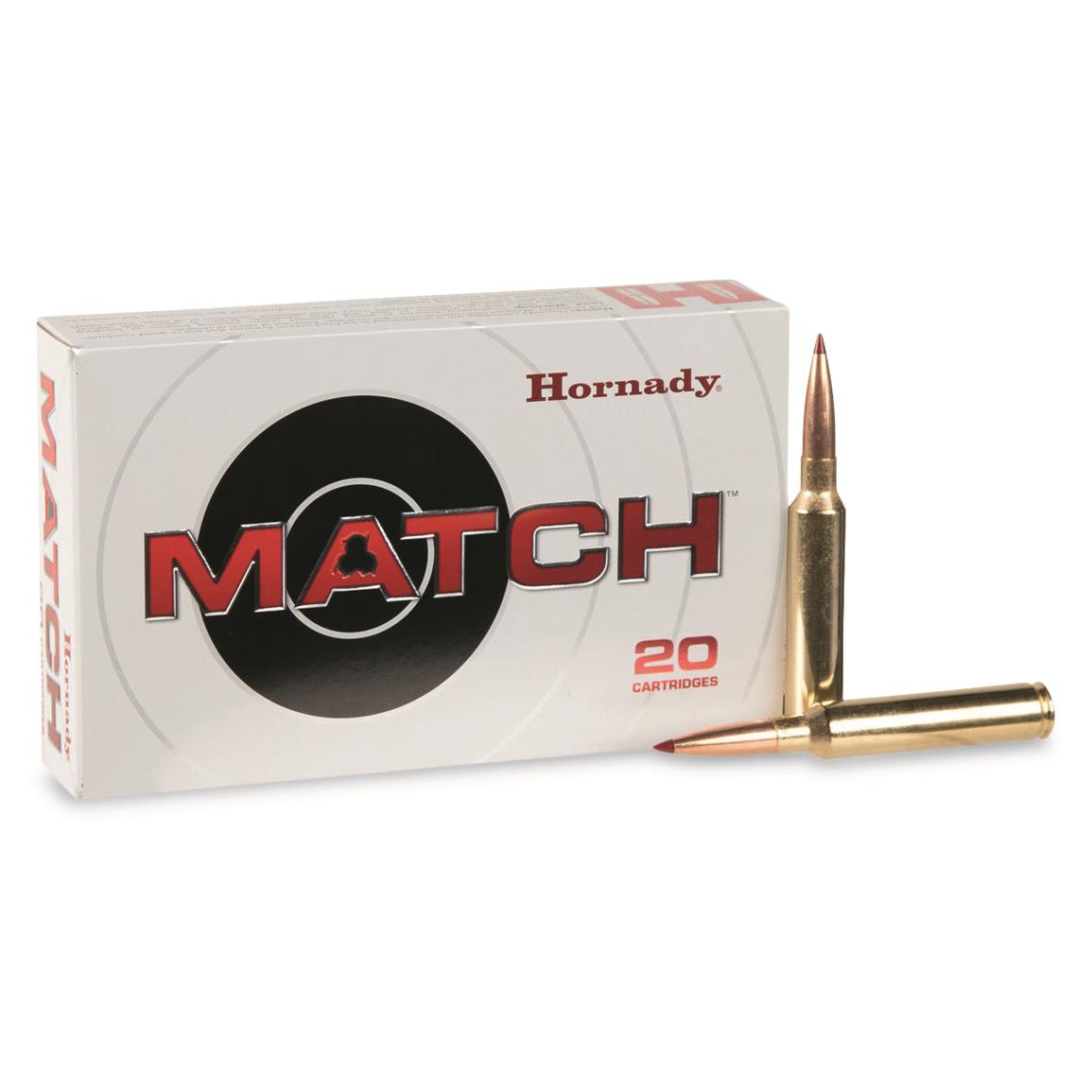
Hornady Match, .300 Win. Mag., ELD Match, 195 Grain
 Ammo Reports Team


Hornady Match .300 Win. Mag. 195 Grain ELD Match — Ammunition Reference
At a Glance
| Feature | Detail |
|---|---|
| Primary Use | Long-range precision shooting, PRS competition, hunting |
| Bullet Type | ELD Match (Extremely Low Drag Match) — polymer-tipped boat-tail |
| Bullet Weight | 195 grain |
| Case Material | Brass |
| Primer Type | Boxer, non-corrosive |
| Packaging | 20 rounds per box |
| Typical Price | $55.57/box — $2.78/round |
| Closest Competitors | Federal Gold Medal Match .300 Win. Mag. 215 gr Berger Hybrid, Nosler Match Grade .300 Win. Mag. 190 gr Custom Competition, Berger Hybrid Hunter .300 Win. Mag. 185 gr Hybrid |
Official Specs
| Spec | Value | Source |
|---|---|---|
| Muzzle Velocity (fps) | — | Not published by manufacturer for this load |
| Muzzle Energy (ft-lbs) | — | Not published by manufacturer for this load |
| Bullet Weight | 195 gr | Hornady |
| Bullet Type | ELD Match | Hornady |
| BC G1 | — | Not published |
| BC G7 | — | Not published |
| Manufacturer SKU | 82043 | Hornady |
| UPC | — | Not confirmed |
| Reloadable | Yes | Brass case, Boxer primer |
Note: Hornady does not publish muzzle velocity, muzzle energy, or ballistic coefficients on the retail product listing for this specific SKU (82043). This is unusual for a match-grade load and may reflect that Hornady publishes BC data for the standalone ELD Match bullet rather than bundling it with this loaded ammunition listing. The standalone 195 gr ELD Match bullet (used in Hornady’s handloading line) carries a G7 BC of approximately 0.351 and a G1 BC of approximately 0.717 — however, these values are published for the projectile component, not this factory load, and are therefore not entered as confirmed specs above. Ballistic table estimates below use those projectile-level figures as a working basis and are labeled accordingly.

Ballistics Table
Calculated estimate. Muzzle velocity is not manufacturer-published for this factory load. The table below uses an estimated muzzle velocity of 2,950 fps, consistent with industry-typical performance for a 195 gr .300 Win. Mag. load from a 26-inch test barrel, and the component bullet’s published G7 BC of 0.351. Real-world results vary by barrel length, temperature, altitude, and lot. Community submissions will provide measured muzzle velocity for comparison.
Zero: 200 yards | Sight height: 1.5" above bore
| Yards | ~Velocity (fps) | ~Energy (ft-lbs) | ~Trajectory (in) |
|---|---|---|---|
| 0 | ~2,950 | ~3,768 | −1.5 |
| 100 | ~2,798 | ~3,393 | +1.8 |
| 200 | ~2,650 | ~3,042 | 0.0 ← zero |
| 300 | ~2,506 | ~2,720 | −6.7 |
| 400 | ~2,366 | ~2,424 | −19.5 |
| 500 | ~2,230 | ~2,152 | −39.6 |
| 600 | ~2,098 | ~1,904 | −68.2 |
| 700 | ~1,969 | ~1,679 | −106.8 |
| 800 | ~1,844 | ~1,472 | −157.3 |
Key takeaway: At a 200-yard zero, this load stays within approximately ±2 inches of line of sight from the muzzle out to roughly 230 yards, making it a practical zero for most long-range precision applications. By 500 yards the drop is approximately 40 inches, which is well within the correction capability of modern precision rifle scopes. The 195 grain ELD Match retains over 1,400 ft-lbs of energy at 800 yards, indicating it remains supersonic and stable well past that distance under standard atmospheric conditions. Shooters running this load for Precision Rifle Series matches or extended-range practice will find the trajectory predictable and the wind drift comparatively modest for the caliber.
The ELD Match Bullet — Why the Tip Matters
The ELD Match (Extremely Low Drag Match) designation is not simply a marketing label. Hornady developed this bullet series after high-speed camera analysis revealed that conventional polymer tips — including those used in earlier A-MAX bullets — deform from aerodynamic heating at velocities above approximately 2,000 fps. That deformation changes the effective ogive profile mid-flight and introduces BC variation, which translates directly to point-of-impact shifts at distance.
Hornady’s solution was a proprietary Heat Shield tip made from a more thermally stable polymer compound. The tip maintains its shape through the full flight envelope, preserving the published BC from muzzle to target. For a long-range match load where a shooter may be calling corrections in tenths of a mil, BC consistency matters more than raw BC magnitude.
The 195 grain weight is also deliberate. Heavier-for-caliber bullets in .300 Win. Mag. allow for higher sectional density and better wind resistance without pushing into the pressure ceiling that a standard .300 Win. Mag. chamber imposes. This weight sits at the upper practical limit for this cartridge and is optimized for 1:10" twist barrels, which are common in factory precision rifles chambered in this caliber.
Best Uses
Good fit:
- Precision Rifle Series (PRS) and similar long-range competition formats where consistent BC and small group sizes are the primary criteria
- Hunting large or heavy game at extended ranges where the 195 grain weight provides adequate sectional density for reliable penetration
- Dedicated long-range practice sessions where predictable drop and wind drift data allow shooters to build accurate dope cards
- Situations where a match-grade primer and tight manufacturing tolerances are required for consistent extreme spread (ES) and standard deviation (SD) in velocity
- Use in bolt-action precision rifles with 24–26 inch barrels, where the powder charge can reach full burn before the bullet exits
Not the right tool for:
- Semi-automatic platforms where heavy 195 grain bullets may create cycling reliability concerns depending on gas system tuning
- Short-barrel rifles (under 22 inches) where muzzle velocity loss will be significant and the advertised performance envelope will not be achieved
- Deer-sized game at close range, where a dedicated hunting bullet with controlled expansion would be more appropriate than a match-grade design
- Shooters on a tight per-round budget — at approximately $2.78 per round, extended practice sessions become costly compared to non-match alternatives
- Jurisdictions with restrictions on lead-core projectiles, as this is a conventional lead-core bullet construction
Reliability Notes
No structured submissions yet.
Based on manufacturer claims and open-source information, the following notes are relevant:
- Hornady’s Match line is manufactured to tighter dimensional tolerances than their hunting or varmint lines, with particular attention to bullet seating depth consistency and case mouth uniformity — these are manufacturer claims, not independently verified by structured submissions.
- The ELD Match bullet’s Heat Shield tip is specifically cited by Hornady as addressing BC variability caused by aerodynamic tip deformation, a documented phenomenon in long-range shooting that had been observed with earlier polymer-tipped designs.
- Brass cases in this line are described by Hornady as being selected and prepared for reloading compatibility, which is relevant for competition shooters who reload fired brass to further reduce per-round cost.
- No active recall or safety notice has been identified for this SKU at the time of publication. This page will be updated if any notice is issued.
Competitors
| Load | Weight | Bullet | BC G1 | Adv. Velocity | Price/box | Notes |
|---|---|---|---|---|---|---|
| Federal Gold Medal Match .300 Win. Mag. | 215 gr | Berger Hybrid OTM | ~0.730 | ~2,810 fps | ~$62–$70 | Premium option; higher BC at cost of velocity |
| Nosler Match Grade .300 Win. Mag. | 190 gr | Custom Competition HPBT | ~0.620 | ~2,900 fps | ~$58–$65 | Direct weight competitor; open-tip match design |
| Berger Hybrid Hunter .300 Win. Mag. | 185 gr | Hybrid Hunter | ~0.650 | ~2,950 fps | ~$55–$62 | Dual-purpose hunting/match; slightly lower weight |
| Lapua Scenar-L .300 Win. Mag. | 185 gr | Scenar-L OTM | ~0.640 | ~3,000 fps | ~$80–$95 | Premium European match; higher price point |
| Winchester Match .300 Win. Mag. | 190 gr | Sierra MatchKing HPBT | ~0.620 | ~2,950 fps | ~$42–$50 | Budget-friendly match alternative; proven bullet |
| Sig Sauer Elite Match .300 Win. Mag. | 195 gr | OTM | ~0.640 | ~2,930 fps | ~$48–$55 | Same weight class; competitive pricing |
Price Reality
- Typical retail range: $52–$62 per box of 20 rounds, with the reference price of $55.57 representing a mid-range market position
- Per-round cost: Approximately $2.78/round at the reference price
- Federal Gold Medal Match in .300 Win. Mag. typically runs $3.10–$3.50 per round, making Hornady Match a moderate savings for equivalent-tier ammunition
- Winchester Match .300 Win. Mag. 190 gr MatchKing is the most accessible budget alternative in this caliber at approximately $2.10–$2.50 per round, offering meaningful savings for high-volume practice
- Lapua match loads in .300 Win. Mag. often exceed $4.00–$4.75 per round, placing the Hornady Match well below the premium European tier
- A price above $68 per box for this specific load should be considered above market rate under normal supply conditions
Prices change. Check the Where to Buy block for current listings.
Where to Buy
Hornady Match, .300 Win. Mag., ELD Match, 195 Grain, 20 Rounds
Affiliate links. These do not influence ratings, data, or any editorial content on this page.
FAQ
Does the ELD Match bullet expand reliably on game, or is it strictly a target bullet?The ELD Match is designed as a match/target bullet and is not engineered for controlled terminal expansion in the way that a dedicated hunting bullet such as a bonded core or monolithic design would be. At typical .300 Win. Mag. impact velocities, the bullet will often expand due to the thin jacket at the tip, but this is not a designed or predictable behavior. Hornady produces a separate ELD-X line for hunting applications where terminal performance is engineered and tested. Shooters who want to use one load for both competition and hunting should evaluate the ELD-X variant rather than this Match load.
How does the 195 grain weight compare to the more common 190 grain match loads in .300 Win. Mag.?The 5-grain difference between 195 and 190 grain loads in this caliber is meaningful at extended range. The additional weight generally supports a higher sectional density and, when paired with a high-BC profile like the ELD Match, produces slightly less wind drift at 600–800 yards compared to 190 grain alternatives at similar velocities. The tradeoff is a modest velocity reduction — typically 30–60 fps — which affects trajectory slightly at mid-range. For PRS-style competition stages beyond 600 yards, the 195 grain advantage becomes more apparent.
Is this load appropriate for a 1:10" twist barrel, or does it require a faster twist?The 195 grain ELD Match bullet is designed to stabilize in a 1:10" twist barrel, which is standard in many factory precision rifles chambered in .300 Win. Mag. Faster twists such as 1:9" or 1:8" will also stabilize this bullet without issue. A 1:11" or slower twist may be marginal at the upper end of bullet length for this weight class and is not recommended. Shooters with custom barrels should verify their twist rate before committing to a match load at this weight.
Can this ammunition be used in a .300 Win. Mag. with a muzzle brake or suppressor?Yes — the Hornady Match load is compatible with muzzle devices including brakes and suppressors, as it is standard pressure ammunition with no special considerations beyond the cartridge itself. Suppressor use may slightly increase muzzle velocity (typically 10–25 fps) due to back-pressure effects, which would marginally shift point of impact at distance. Shooters using a suppressor for precision competition should re-zero and re-establish their dope with the device attached.
Why doesn’t Hornady publish muzzle velocity for this factory load on their website?This is a legitimate gap in the published data. Hornady publishes detailed ballistic data for their ELD Match component bullets in their reloading manual and on their website’s ballistic calculator, but the factory-loaded ammunition listing for SKU 82043 does not include a stated muzzle velocity or energy figure on the primary product page at the time of publication. This is atypical compared to their Superformance or Precision Hunter lines, which consistently publish velocity data. It is possible that Hornady intends for users to reference the component bullet data as a proxy, but this page treats unpublished specs as unpublished and does not assume equivalence.