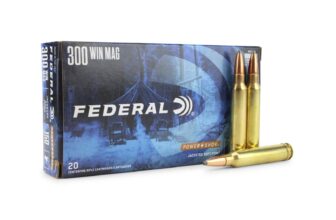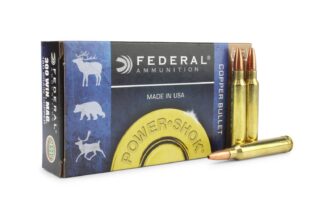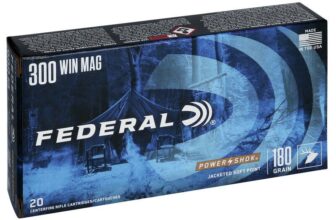
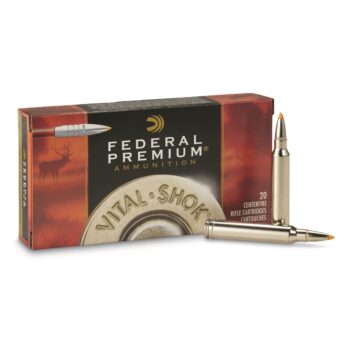
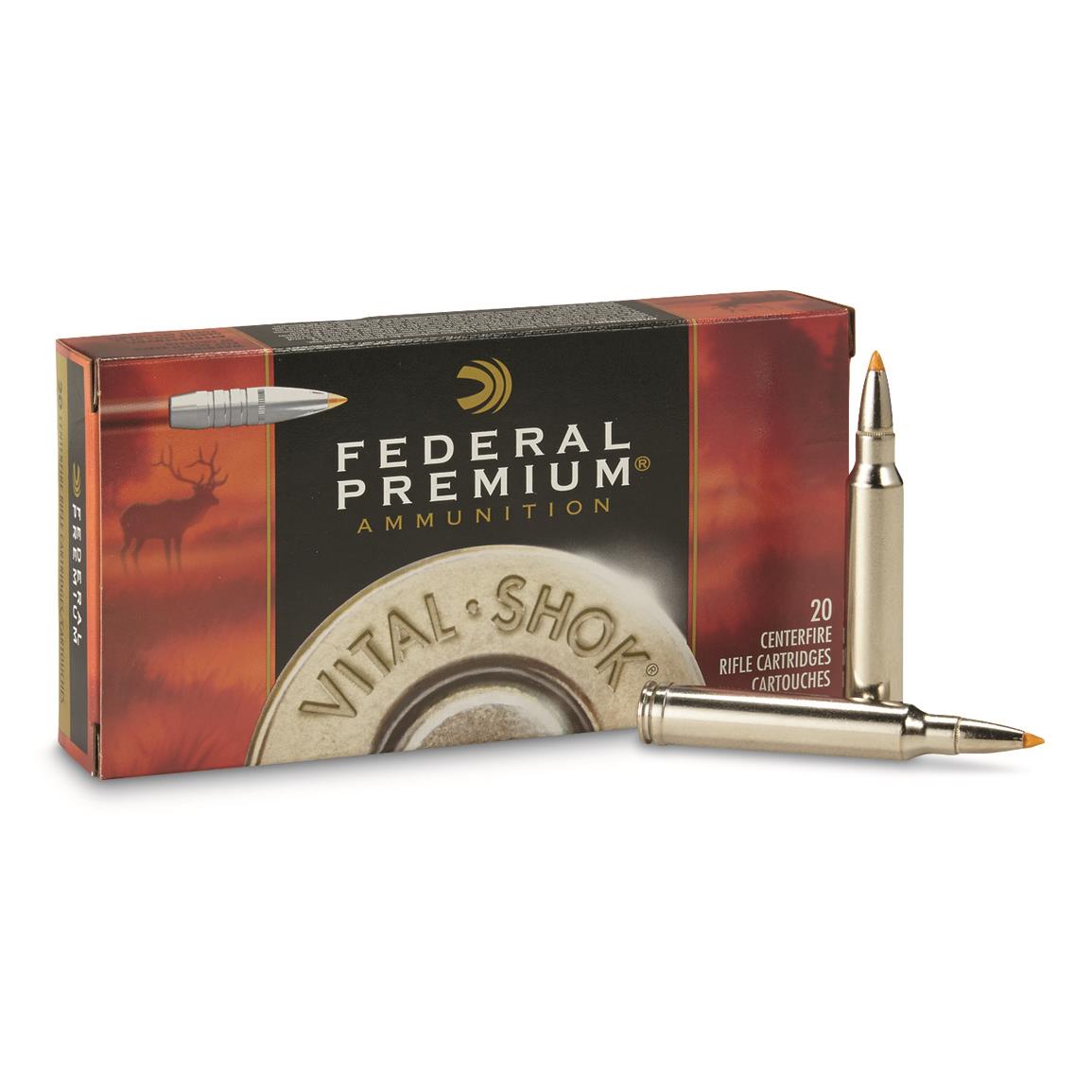
Federal Premium, .300 Win. Mag., TBT, 180 Grain
 Ammo Reports Team


Federal Premium .300 Win. Mag. TBT 180 Grain — Ammunition Reference
At a Glance
| Feature | Detail |
|---|---|
| Primary Use | Big game hunting; long-range field shooting |
| Bullet Type | Terminal Ascent Bonded Tip (TBT) — bonded lead core, polymer tip, boat tail |
| Bullet Weight | 180 grain |
| Case Material | Brass |
| Primer Type | Boxer, centerfire |
| Packaging | 20 rounds per box |
| Typical Price | $52.24/box · $2.61/round |
| Closest Competitors | Hornady Precision Hunter .300 Win. Mag. 178 gr ELD-X · Winchester Expedition Big Game .300 Win. Mag. 180 gr AccuBond CT · Nosler Trophy Grade .300 Win. Mag. 180 gr AccuBond |
Official Specs
| Spec | Value | Source |
|---|---|---|
| Muzzle Velocity (fps) | — | Not published by manufacturer for this SKU |
| Muzzle Energy (ft-lbs) | — | Not published by manufacturer for this SKU |
| Bullet Weight | 180 gr | Federal Premium |
| Bullet Type | Terminal Ascent Bonded Tip (TBT) | Federal Premium |
| BC G1 | — | Not published |
| BC G7 | — | Not published |
| Manufacturer SKU | — | Not confirmed from available data |
| UPC | — | Not confirmed from available data |
| Reloadable | Yes | Brass case, Boxer primer |
Note on missing velocity and energy: Federal Premium does not consistently publish muzzle velocity or muzzle energy for every Terminal Ascent load across all retail channels. The data provided by the source listing contains no ballistic figures. No velocity or energy values have been calculated or assumed for this table. Community-submitted chronograph data will be added here as it becomes available.
Note on BC values: Federal Premium publishes G1 and G7 BC figures for some Terminal Ascent loads on its website, but none were confirmed for this specific 180 gr .300 Win. Mag. SKU from the available data. Do not assume BC values from other Federal Terminal Ascent loads in different calibers apply here.

Ballistics Table
Calculated estimate. Real-world results vary by barrel length, temperature,altitude, and lot. Community submissions will provide measured muzzlevelocity for comparison.
Note: Because no manufacturer-published muzzle velocity is available for this load, all values below are preceded by
~to indicate they are estimates. The calculation uses a representative muzzle velocity of 2,960 fps — a commonly observed figure for 180 gr .300 Win. Mag. factory loads from 24" test barrels — combined with an estimated G1 BC of 0.507, consistent with a bonded, polymer-tipped 180 gr .30-caliber bullet. These figures should not be treated as manufacturer specifications. Zero: 200 yards. Sight height: 1.5" above bore.
| Yards | ~Velocity (fps) | ~Energy (ft-lbs) | ~Trajectory (in) |
|---|---|---|---|
| 0 | ~2,960 | ~3,501 | −1.5 |
| 100 | ~2,769 | ~3,065 | +2.1 |
| 200 | ~2,585 | ~2,671 | 0.0 ← zero |
| 300 | ~2,408 | ~2,318 | −8.7 |
| 400 | ~2,237 | ~1,998 | −24.9 |
| 500 | ~2,073 | ~1,716 | −50.2 |
| 600 | ~1,916 | ~1,467 | −86.5 |
| 700 | ~1,765 | ~1,245 | −136.4 |
| 800 | ~1,622 | ~1,052 | −202.8 |
Key takeaway: At a 200-yard zero, this load carries meaningful energy well past 400 yards — estimated above 1,900 ft-lbs at 500 yards — which comfortably exceeds the widely cited 1,000 ft-lb minimum for ethical big game hunting at extended range. The flat trajectory through 300 yards makes hold-over corrections modest for most field shooting scenarios. Wind drift is not shown here; at 600–800 yards, wind compensation becomes the dominant variable and should be modeled with a ballistic solver using confirmed BC and actual atmospheric data. These figures are estimates only and must be verified against chronograph data before use in precision applications.
The Federal Terminal Ascent Bullet
The Terminal Ascent (TBT) bullet is Federal Premium’s flagship bonded hunting projectile, designed to address a long-standing tension in hunting bullet design: high-BC, sleek profiles that perform well at distance tend to expand inconsistently at the reduced velocities encountered at long range, while traditional bonded bullets built for reliable expansion can sacrifice aerodynamic efficiency.
Federal’s answer is a dual-purpose construction that bonds the rear lead core to the jacket — retaining mass and preventing separation on impact — while leaving the forward portion of the core unbonded to initiate expansion even at velocities as low as 1,600 fps. A polymer tip seated in the hollow point accelerates expansion on contact and protects the tip from deformation during recoil in the magazine. The boat tail geometry and sleek ogive are optimized for a high ballistic coefficient, making this bullet competitive with match-style projectiles in terms of wind resistance and retained velocity at distance.
The 180 grain weight in . 300 Winchester Magnum represents a traditional pairing for this cartridge — heavy enough to retain energy at long range and resist wind deflection, while remaining within the velocity envelope where the .300 Win. Mag. case performs efficiently. This combination positions the load as a serious option for elk, moose, and large mule deer at ranges that would stress lesser bullet designs.
Best Uses
Good fit:
- Elk, moose, and large mule deer at ranges from 50 to 500+ yards where bullet integrity and retained weight are priorities
- Open-country hunting where shots may vary widely in distance and a single zero must serve multiple scenarios
- Hunters who want a bonded bullet with a high BC without moving to a premium hand-loaded option
- Situations requiring deep penetration on heavy-boned animals where cup-and-core bullets have historically shown inconsistency
- Long-range field shooting where terminal performance at reduced impact velocity is a concern
Not the right tool for:
- Varmint or predator hunting where rapid fragmentation is desirable — the bonded construction resists breakup by design
- Close-range brush hunting where the flat-shooting advantage of the .300 Win. Mag. is irrelevant and a heavier, slower cartridge may be more appropriate
- Shooters on a tight per-round budget — at approximately $2.61/round, sustained practice volume is expensive
- Jurisdictions with lead-free bullet requirements (California, certain national parks) — this is a traditional lead-core load and is not compliant where lead projectiles are prohibited
- Thin-skinned, lightweight game such as pronghorn or deer at close range, where the bullet’s construction may over-penetrate without adequate energy transfer
Reliability Notes
No structured submissions yet.
Based on manufacturer claims and open-source product information: Federal Premium describes the Terminal Ascent line as engineered for consistent expansion across a wide velocity range, with the bonded core intended to retain approximately 95% or more of bullet weight on impact. The polymer tip is cited as protecting against tip deformation during magazine feeding — a known issue with some polymer-tipped designs in box magazines under recoil. Federal loads Terminal Ascent ammunition in nickel-plated or brass cases depending on the specific product line; the case finish for this particular SKU was not confirmed from available data. No recall notices, safety advisories, or documented lot-specific issues were identified for this load at the time of writing. All performance claims above originate from manufacturer marketing materials, not structured ballistic testing data submitted to this database.
Competitors
| Load | Weight | Bullet | BC G1 | Adv. Velocity | Price/box | Notes |
|---|---|---|---|---|---|---|
| Hornady Precision Hunter .300 Win. Mag. 178 gr ELD-X | 178 gr | ELD-X (polymer tip, InterLock ring) | 0.552 | ~2,960 fps | ~$55–$65 | High BC; not bonded — core-jacket separation possible at high velocity |
| Winchester Expedition Big Game .300 Win. Mag. 180 gr AccuBond CT | 180 gr | Nosler AccuBond CT (bonded) | ~0.507 | ~2,950 fps | ~$60–$70 | Bonded; same weight class; premium tier |
| Nosler Trophy Grade .300 Win. Mag. 180 gr AccuBond | 180 gr | AccuBond (bonded, polymer tip) | 0.507 | ~2,960 fps | ~$58–$68 | Direct construction competitor; widely available |
| Federal Power-Shok .300 Win. Mag. 180 gr SP | 180 gr | Soft point, cup-and-core | ~0.383 | ~2,960 fps | ~$28–$35 | Budget alternative; lower BC, not bonded, proven deer load |
| Berger Hybrid Hunter .300 Win. Mag. 185 gr | 185 gr | Hybrid Hunting (VLD-style, not bonded) | 0.552 | ~2,950 fps | ~$65–$80 | Premium alternative; exceptional BC; not bonded; terminal performance different at high velocity |
| Barnes VOR-TX .300 Win. Mag. 180 gr TTSX | 180 gr | TTSX (all-copper, lead-free) | 0.459 | ~2,960 fps | ~$55–$70 | Lead-free alternative; compliant for California; all-copper construction |
Price Reality
- At the reference price of $52.24 per box, this load costs approximately $2.61 per round
- Case pricing (typically 10 boxes / 200 rounds) was not confirmed from available data; buyers should verify case discounts at time of purchase
- Federal Power-Shok .300 Win. Mag. 180 gr SP runs approximately $1.40–$1.75/round — roughly 35–45% less per round for a non-bonded alternative
- Hornady Precision Hunter 178 gr ELD-X typically runs $2.75–$3.25/round, placing the Federal TBT at a slight price advantage in the premium bonded segment
- Nosler Trophy Grade 180 gr AccuBond typically runs $2.90–$3.40/round, making the Federal TBT competitively priced against its closest construction analog
- A price above $65/box ($3.25/round) for this specific load should be considered above market unless supply conditions are unusual
- For range practice and load familiarization, the Federal Power-Shok or comparable non-premium .300 Win. Mag. loads offer a more economical option, reserving the TBT for field use
Prices change. Check the Where to Buy block for current listings.
Where to Buy
Federal Premium, .300 Win. Mag., TBT, 180 Grain, 20 Rounds
Affiliate links. These do not influence ratings, data, or any editorial content on this page.
FAQ
What makes the Federal Terminal Ascent bullet different from a standard bonded bullet?Most bonded bullets bond the entire lead core to the jacket, which provides excellent weight retention but can limit the speed and consistency of expansion — particularly at lower impact velocities encountered at long range. The Federal Terminal Ascent design leaves the front portion of the core unbonded while bonding the rear section, so the front expands readily even at velocities around 1,600 fps while the bonded rear retains mass and drives penetration. The polymer tip initiates expansion on contact and maintains its shape in the magazine. This dual-zone construction is the key engineering distinction from conventional bonded designs like the Nosler Partition or older Federal Trophy Bonded Bear Claw.
Is this load legal for hunting in California or other lead-restricted zones?No. The Federal Premium TBT 180 gr uses a traditional lead core bonded to a copper-alloy jacket. It is not a lead-free projectile and does not comply with California’s lead-free ammunition regulations for hunting, nor with lead restrictions in certain national wildlife refuges and parks. Hunters who require lead-free compliance should look at the Barnes VOR-TX .300 Win. Mag. 180 gr TTSX or similar all-copper alternatives. Always verify current regulations in your specific hunting unit before purchasing ammunition.
How does this load compare to the Hornady Precision Hunter 178 gr ELD-X for elk hunting?Both are legitimate premium choices for elk, but they represent different design philosophies. The ELD-X prioritizes a very high ballistic coefficient (G1 ~0.552) and consistent expansion, but it is not a bonded bullet — at high impact velocities from close range, some hunters have reported more fragmentation than desired on heavy game. The Federal TBT’s bonded construction is specifically engineered to resist core-jacket separation, which can be an advantage on large, heavily muscled animals like elk where deep, straight-line penetration matters. At longer ranges where impact velocity is reduced, both bullets are designed to expand reliably, but the TBT’s bonded rear section provides a stronger guarantee of retained weight.
What is the effective maximum range for ethical big game hunting with this load?This depends on the terminal performance threshold you apply and the specific game. A commonly used benchmark is 1,000 ft-lbs of retained energy for elk-sized game. Based on estimated ballistic data using a representative muzzle velocity of ~2,960 fps, this load likely retains that energy threshold at or beyond 600 yards. However, ethical range is not solely a function of energy — wind reading ability, shooter proficiency, and field conditions all constrain real-world maximum range. For most hunters in typical field conditions, 400–500 yards represents a practical ceiling where confidence in both trajectory and terminal performance can be maintained. The Terminal Ascent’s low-velocity expansion capability extends the theoretical range, but hunter skill remains the binding constraint.
Can the brass cases from this load be reloaded?Yes. Federal Premium loads this ammunition in Boxer-primed brass cases, which are compatible with standard reloading dies, decapping tools, and primers. The cases are reloadable in the conventional sense. However, this page covers factory ammunition only and does not provide reloading data, charge weights, or handload guidance. Reloaders should consult current published reloading manuals from powder and bullet manufacturers for safe load development in .300 Winchester Magnum. Note that bonded bullets like the Terminal Ascent are typically not sold as component bullets for handloading through standard retail channels; Federal’s component bullet offerings differ from its loaded ammunition lineup.