 Ammo Reports Team
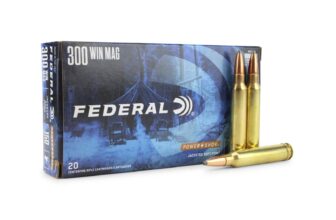
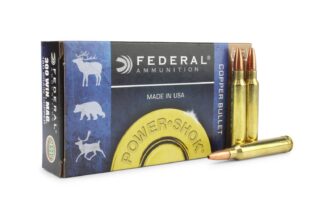
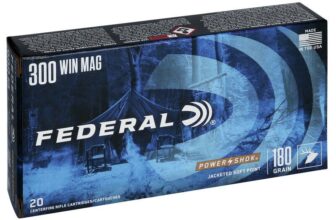
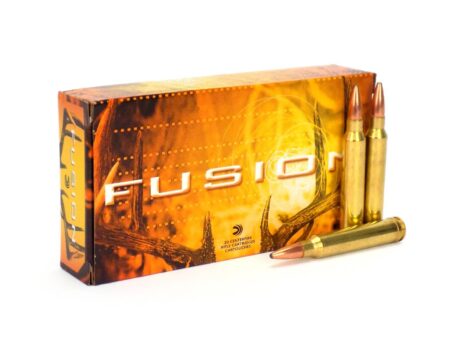
Federal 300 Win Mag 165 Gr Fusion (Box)
At a Glance
| Feature | Detail |
|---|---|
| Primary Use | Deer hunting |
| Bullet Type | Fusion Bonded Soft Point (molecularly bonded jacket, pressure-formed core) |
| Bullet Weight | 165 gr |
| Case Material | Brass |
| Primer Type | Boxer (centerfire) |
| Packaging | 20 rounds per box |
| Typical Price | $55.99/box — $2.80/round |
| Closest Competitors | Winchester 300 Win Mag 165 Gr Power-Point, Hornady 300 Win Mag 165 Gr InterLock SP, Remington 300 Win Mag 165 Gr Core-Lokt |
Official Specs
| Spec | Value | Source |
|---|---|---|
| Muzzle Velocity (fps) | — | Not published by manufacturer for this load |
| Muzzle Energy (ft-lbs) | — | Not published by manufacturer for this load |
| Bullet Weight | 165 gr | Federal product listing |
| Bullet Type | Fusion Bonded Soft Point | Federal product listing |
| BC G1 | — | Not published |
| BC G7 | — | Not published |
| Manufacturer SKU | — | Not published in available data |
| UPC | — | Not published in available data |
| Reloadable | Yes | Brass case, Boxer primer |
Note: Federal does not publish muzzle velocity or muzzle energy for this specific 165 gr Fusion load in currently available product data. The ballistics table below uses calculated estimates based on typical 165 gr .300 Win Mag performance from a 24" test barrel. These values are labeled accordingly. Community-submitted chronograph data will be incorporated as it becomes available. BC values are not published by Federal for the Fusion line and have not been estimated here.


Ballistics Table
Calculated estimate. Real-world results vary by barrel length, temperature, altitude, and lot. Community submissions will provide measured muzzle velocity for comparison.
Assumptions: 3,060 fps estimated muzzle velocity (typical for 165 gr .300 Win Mag from a 24" barrel), G1 BC ~0.447 (industry-typical for 165 gr bonded soft point), 200-yard zero, 1.5" sight height above bore, standard conditions (sea level, 59°F, no wind).
| Yards | Velocity (fps) | Energy (ft-lbs) | Trajectory (in) |
|---|---|---|---|
| 0 | ~3,060 | ~3,432 | -1.5 |
| 100 | ~2,843 | ~2,962 | +1.8 |
| 200 | ~2,635 | ~2,543 | 0.0 ← zero |
| 300 | ~2,436 | ~2,173 | -7.6 |
| 400 | ~2,245 | ~1,846 | -21.8 |
| 500 | ~2,063 | ~1,559 | -44.2 |
| 600 | ~1,890 | ~1,308 | -76.5 |
| 700 | ~1,727 | ~1,092 | -120.8 |
| 800 | ~1,574 | ~907 | -179.4 |
Key takeaway: At a 200-yard zero, this load stays within roughly ±2 inches of the line of sight from the muzzle out to approximately 230 yards — a practical maximum point-blank range well suited to most whitetail deer hunting scenarios. Energy remains above 1,500 ft-lbs through 500 yards, which exceeds the widely cited minimum threshold for ethical deer hunting at extended ranges. Beyond 600 yards, wind drift and velocity decay become significant factors, and the calculated nature of these figures means real-world results should be verified with a chronograph before long-range field use. For most hunters shooting inside 400 yards, the trajectory is forgiving and the retained energy is substantial.
The Fusion Bonded Bullet Design
The Federal Fusion line occupies a specific engineering niche that distinguishes it from conventional cup-and-core hunting bullets. The construction method begins with electrochemical bonding of the jacket to the core — a process Federal describes as molecular bonding — rather than mechanically crimping or locking the two components together. This is significant because jacket-core separation is one of the primary failure modes of conventional soft-point bullets at high impact velocities, which are common with the .300 Winchester Magnum at moderate ranges.
The pressure-formed core is swaged under high pressure into the jacket, creating a uniform density profile that contributes to consistent upset across a range of impact velocities. The result is a bullet designed to retain a high percentage of its original weight through the target while still expanding reliably — two properties that are often in tension with each other in conventional bullet designs. Federal positioned Fusion as a deer-specific load from its introduction, meaning the expansion parameters are tuned for medium-sized big game rather than for varmints or dangerous game. This context matters when evaluating whether the load is appropriate for a given application.
Best Uses
Good fit:
- Whitetail deer hunting at ranges from close timber shots out to approximately 400 yards
- Mule deer and pronghorn in open country where a flat-shooting magnum cartridge is appropriate
- Hunters who want bonded-bullet performance at a price point below premium tipped or polymer-tip bonded loads
- Situations where jacket-core separation is a concern due to high-velocity close-range shots
- Hunters seeking a load that balances terminal expansion with adequate weight retention for pass-through wounds
Not the right tool for:
- Elk, moose, or other large or tough-bodied game where deeper penetration from a heavier, controlled-expansion bullet is preferred
- Varmint or predator hunting, where the 165 gr .300 Win Mag is excessive and the Fusion bullet is not designed for rapid fragmentation
- Long-range precision shooting beyond 600 yards, where published BC data would be needed for reliable drop compensation
- Lead-restricted hunting zones — Fusion bullets are not lead-free and do not comply with California condor zone regulations or other lead-free mandates
- Hunters who require maximum energy transfer from a fragmenting bullet rather than the controlled expansion Fusion provides
Reliability Notes
No structured submissions yet.
Based on manufacturer claims and open-source product information: Federal describes the Fusion line as producing controlled, consistent expansion across a range of impact velocities, which is relevant for a high-velocity cartridge like the .300 Win Mag where impact velocity at close range can be significantly higher than at 300 yards. The molecularly bonded jacket construction is intended to prevent the jacket-core separation that can reduce terminal effectiveness with standard cup-and-core bullets. These claims come from Federal’s own product literature and have not been independently verified through structured submissions to this database. No recall notices or safety advisories have been identified for this load at the time of publication.
Competitors
| Load | Weight | Bullet | BC G1 | Muzzle Velocity | Price/Box | Notes |
|---|---|---|---|---|---|---|
| Winchester Power-Point 300 Win Mag 165 gr | 165 gr | Cup-and-core SP | ~0.430 | ~3,060 fps | ~$45–$52 | Budget alternative; non-bonded jacket |
| Remington Core-Lokt 300 Win Mag 165 gr | 165 gr | Cup-and-core SP | ~0.433 | ~3,060 fps | ~$45–$55 | Budget alternative; long-established deer load |
| Hornady American Whitetail 300 Win Mag 165 gr | 165 gr | InterLock SP | ~0.447 | ~3,060 fps | ~$48–$58 | Similar price tier; mechanically locked (not bonded) jacket |
| Federal Trophy Bonded Tip 300 Win Mag 165 gr | 165 gr | Trophy Bonded Tip | ~0.480 | ~3,080 fps | ~$75–$90 | Premium alternative; same Federal family, higher BC, polymer tip |
| Nosler Trophy Grade 300 Win Mag 165 gr AccuBond | 165 gr | AccuBond (bonded polymer tip) | ~0.475 | ~3,100 fps | ~$65–$80 | Premium bonded alternative with published BC |
| Hornady Precision Hunter 300 Win Mag 178 gr ELD-X | 178 gr | ELD-X (bonded tipped) | ~0.552 | ~2,960 fps | ~$65–$80 | Heavier, higher BC; better for extended range use |
Price Reality
- Typical retail range: $50–$60 per 20-round box; case pricing (typically 200 rounds / 10 boxes) runs approximately $480–$560 when available
- Per-round cost: approximately $2.75–$3.00 at standard retail pricing
- The Winchester Power-Point and Remington Core-Lokt in 165 gr .300 Win Mag typically run $5–$12 less per box, making them meaningfully cheaper for hunters who shoot high volumes in practice
- The Federal Trophy Bonded Tip in the same caliber and weight runs $20–$35 more per box, offering a higher BC and polymer tip at a significant premium
- Fair price benchmark: $55–$60 per box is in line with current bonded hunting ammunition pricing for this caliber. Prices above $65/box for this specific load should be considered elevated unless supply conditions justify it.
Prices change. Check the Where to Buy block for current listings.
Where to Buy
Federal 300 Win Mag 165 Gr Fusion (Box)
Affiliate links. These do not influence ratings, data, or any editorial content on this page.
FAQ
Does the Fusion bonding process make a meaningful difference compared to standard cup-and-core bullets in the .300 Win Mag?At the velocities generated by the .300 Winchester Magnum, jacket-core separation is a legitimate concern with conventional cup-and-core designs, particularly on close-range shots where impact velocity may exceed 2,800 fps. The Fusion’s electrochemical bonding is designed to keep the jacket and core together through the impact event, which generally results in higher weight retention and a more consistent wound channel. For deer-sized game at typical hunting distances, the difference may be modest in practice — but the bonded construction provides a margin of reliability that non-bonded bullets cannot guarantee under all impact conditions. Hunters shooting at close range in heavy cover, where high-velocity impacts are most likely, stand to benefit most from this design.
Is the Federal Fusion 165 gr .300 Win Mag appropriate for elk?Federal markets the Fusion line specifically for deer hunting, and the 165 gr weight and expansion parameters reflect that intent. For elk, most ballistic authorities recommend bullets with deeper penetration and higher weight retention than a deer-optimized bonded soft point typically provides, along with bullet weights of 180 gr or heavier in the .300 Win Mag. While the Fusion will certainly generate sufficient energy for elk at reasonable distances, a controlled-expansion bullet such as the Federal Trophy Bonded, Barnes TTSX, or Nosler Partition in a heavier weight would be a more appropriate choice for large-bodied, heavy-boned game. Using this load on elk is not unsafe, but it is not the optimal tool for that application.
Can this ammunition be used in states or zones with lead-free requirements?No. The Federal Fusion uses a lead core and is not compliant with California’s lead-free ammunition regulations or similar restrictions in condor zones and other designated areas. Hunters who need to comply with lead-free mandates should look at Barnes VOR-TX, Federal Trophy Copper, or Hornady GMX loads in .300 Win Mag, all of which use solid copper or copper-alloy projectiles. Always verify current regulations with your state fish and wildlife agency before purchasing ammunition for use in restricted zones, as these rules can change and vary by specific management area.
How does the Federal Fusion 165 gr compare to the Federal Trophy Bonded Tip in the same caliber?Both loads use bonded bullet construction, but the Federal Trophy Bonded Tip adds a polymer tip that initiates expansion more consistently at lower impact velocities — relevant for longer shots where velocity has decayed — and typically carries a higher published BC for improved long-range trajectory. The Trophy Bonded Tip also undergoes a different manufacturing process that Federal positions as a step above the Fusion in their product hierarchy. The Fusion 165 gr is the better value for hunters shooting inside 400 yards at deer-sized game, while the Trophy Bonded Tip justifies its higher price for hunters who routinely take shots at extended distances or who hunt larger, tougher species.
What barrel length does Federal use to test this ammunition, and how will a shorter hunting rifle affect performance?Federal does not publish the test barrel length for this specific Fusion load in currently available product data, though the industry standard for rifle cartridge testing is typically a 24-inch barrel. Most bolt-action hunting rifles chambered in .300 Win Mag use 24" or 26" barrels, so velocity loss from a shorter barrel is generally not a concern with this caliber. However, hunters using 22" barrels — which are less common but available — can expect a velocity reduction of approximately 25–50 fps per inch of barrel lost, which at close hunting distances has no meaningful practical effect on terminal performance. The more significant variable is altitude and temperature, both of which affect powder burn efficiency and can shift velocity by a meaningful margin in extreme conditions.