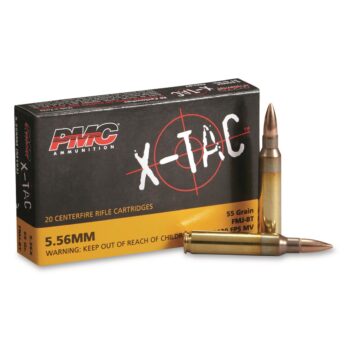
PMC X-Tac, 5.56x45mm NATO, FMJ-BT, 55 Grain
 Ammo Reports Team


| Feature | Detail |
|---|---|
| Primary Use | Target shooting, training, and range practice |
| Bullet Type | 55-grain full metal jacket boat tail (FMJ-BT) |
| Case | Brass (short-action) |
| Primer | Boxer (Small Rifle Primer, may be crimped) |
| Packaging | 20 rounds per box |
| Typical Price | $9.49/box – $0.47/round |
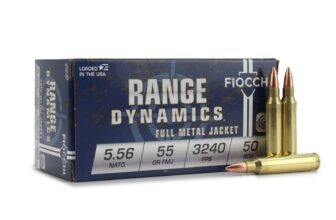
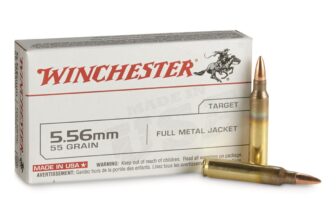
| Closest Competitors | Fiocchi Range Dynamics 5.56 NATO 55 Grain FMJBT; Winchester White Box 5.56 NATO 55 Grain FMJ; Wolf Gold 5.56 NATO 55 Grain FMJ |
Official Specs
| Spec | Value | Source |
|---|---|---|
| Muzzle Velocity (fps) | 3,120 | PMC official data, 16-inch test barrel |
| Muzzle Energy (ft-lbs) | 1,189 | PMC official data, 16-inch test barrel |
| Bullet Weight | 55 gr | PMC official product data |
| Bullet Type | Full Metal Jacket Boat Tail (FMJ-BT) | PMC official product data |
| BC G1 | 0.243 | PMC official product data |
| BC G7 | – | Not found in verified official manufacturer sources |
| Manufacturer SKU | 5.56X | PMC official product data |
| UPC | 741569010115 | Verified exact product identification |
| Case Material | Brass (short-action) | PMC official product construction |
| Primer | Boxer (Small Rifle Primer, may be crimped) | PMC official primer information |
| Reloadable | Yes | PMC official product information |
| Package Quantity | 20 rounds | Verified exact product identification |
Verification note: Exact PMC X-Tac SKU 5.56X uses a 55-grain FMJ-BT bullet and UPC 741569010115. PMC publishes 3,120 fps from a 16-inch barrel and 3,270 fps from a 20-inch barrel. The table below consistently uses the official 16-inch data set.
Ballistics Table
Velocity, muzzle energy, and trajectory through 500 yards are official PMC manufacturer data for exact SKU 5.56X using the 16-inch barrel selection. PMC does not publish downrange energy, 10 mph wind drift, or verified 600- and 700-yard values in this table.
| Range (yd) | Velocity (fps) | Energy (ft-lbs) | Trajectory (in) | 10 mph Wind Drift (in) |
|---|---|---|---|---|
| 0 | 3,120 | 1,189 | -1.5 | – |
| 100 | 2,727 | – | 0 | – |
| 200 | 2,366 | – | -3.2 | – |
| 300 | 2,033 | – | -12.7 | – |
| 400 | 1,731 | – | -30.7 | – |
| 500 | 1,464 | – | -60.6 | – |
| 600 | – | – | – | – |
| 700 | – | – | – | – |
Manufacturer conditions: 16-inch test barrel and 100-yard zero. The published muzzle trajectory is -1.5 inches. Atmospheric conditions and wind convention were not stated. Blank cells are intentional.
Best Uses
Good fit:
- High-volume rifle training sessions where per-round cost matters
- Zeroing and function-testing AR-15 and M16-pattern rifles
- Carbine courses and range drills requiring reliable semi-automatic cycling
- Bulk practice for 5.56 NATO-chambered rifles where chamber pressure headspace is a consideration over .223 Rem
- Steel target shooting at ranges within 200 yards
Not the right tool for:
- Hunting — FMJ-BT construction is prohibited for deer and most big game in nearly all U.S. jurisdictions due to lack of controlled expansion
- Precision long-range shooting where published BC and velocity data are required for accurate ballistic solutions
- Self-defense or home protection — non-expanding FMJ is not optimized for terminal performance in soft tissue
- Jurisdictions with lead-core projectile restrictions (California condor zones, certain public ranges)
- Shooters who need a documented, published ballistic data sheet for competition or military qualification records
Reliability Notes
No standardized manufacturer reliability test results were found for exact SKU 5.56X across multiple firearms. PMC states that this product complies with military specifications and may use a crimped primer. Confirm feeding, extraction, ignition, and point of impact in the specific 5.56 NATO firearm and magazines used for training.
Competitors
- Fiocchi Range Dynamics 5.56 NATO 55 Grain FMJBT – a published 55-grain boat-tail load with official factory ballistics.
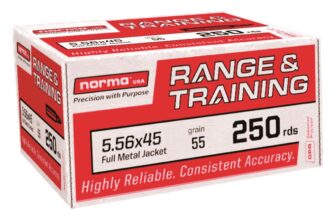
- Norma Range & Training 5.56 NATO 55 Grain FMJ – a published 250-round bulk-pack alternative.
- Winchester White Box 5.56 NATO 55 Grain FMJ – another published training load.
- Wolf Gold 5.56 NATO 55 Grain FMJ – a published brass-cased M193-style option.
Price Reality
- Typical retail range: $8.50–$11.00 per 20-round box depending on retailer and current market conditions
- Per-round cost at reference price: $0.47/round at $9.49/box
- Case pricing: When available in 1,000-round cases, comparable 55gr 5.56 NATO FMJ-BT loads typically run $0.38–$0.48/round, suggesting bulk purchasing may offer meaningful savings
- Compared to Federal American Eagle AE5.56J: PMC X-Tac at $9.49 comes in roughly $1.00–$1.50/box cheaper than American Eagle at typical retail, with similar construction
- Compared to Hornady Black 5.56: PMC X-Tac offers a significant cost advantage of approximately $5.00–$6.00/box for shooters who do not require the tighter tolerances of a premium load
- Compared to budget alternatives (Fiocchi, Magtech): PMC X-Tac sits mid-tier; budget alternatives may undercut by $0.50–$1.00/box but with less consistent brand recognition in the U.S. market
- Fair price benchmark: Paying more than $12.00 for a 20-round box of 55gr 5.56 FMJ-BT at standard market conditions represents an above-market price for this class of training ammunition
Prices change. Check the Where to Buy block for current listings.
Where to Buy
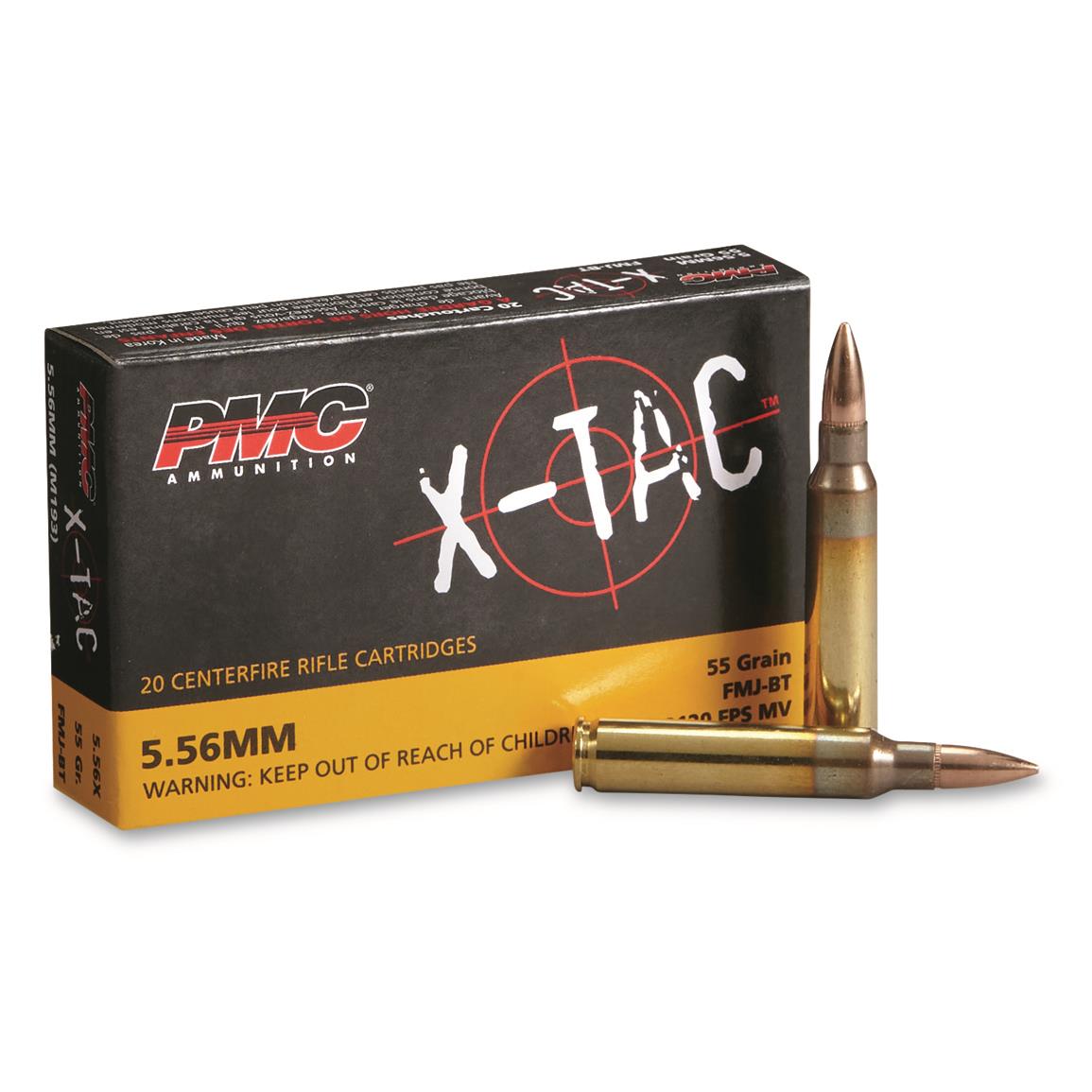
PMC X-Tac, 5.56x45mm NATO, FMJ-BT, 55 Grain, 20 Rounds
Affiliate links. These do not influence ratings, data, or any editorial content on this page.
What is the exact PMC X-Tac product number?
The exact product is PMC SKU 5.56X with UPC 741569010115.
Why does PMC show two muzzle velocities?
PMC publishes 3,120 fps for a 16-inch barrel and 3,270 fps for a 20-inch barrel. This page uses the 16-inch factory table consistently.
What ballistic coefficient does PMC publish?
PMC publishes a G1 ballistic coefficient of 0.243. A verified G7 value was not found.
Is the primer crimped?
PMC states that its rifle ammunition may use crimped military primers. Inspect and remove any primer-pocket crimp before reloading.
Are the wind-drift values calculated?
No. PMC does not publish 10 mph wind drift in the verified table, so those cells remain blank.
Submit Your Data · Real-World Results
Manufacturer velocity figures are measured under controlled lab conditions — barrel length, temperature, and lot number all affect real-world performance. The data below comes from community submissions tied to specific test conditions and reviewed before publishing.
Once this page reaches 3 approved submissions, aggregate velocity and confidence level will appear here automatically.
| UPC # | Firearm | Barrel (in) | Avg Velocity (fps) | Shots | Temp (°F) | Chronograph | Lot | Notes |
|---|---|---|---|---|---|---|---|---|
| – | — | — | — | — | — | — | — | No data yet |
Shot this load? Share your results — firearm type, barrel length, average velocity, shots fired, temperature. No account required.
Barrel length is especially important for this load — the velocity difference between a 24″ and 18.5″ barrel is over 200 fps. Please include your exact barrel length in the submission.
All submissions are manually reviewed before appearing on this page.
You need to login first.Results vary by firearm, barrel condition, ammunition lot, and environmental factors. Submitted data is for reference only. AmmoReports does not guarantee accuracy of user-submitted results.
PMC X-Tac, 5.56x45mm NATO, FMJ-BT, 55 Grain, 20 Rounds
Last updated: April 2026 ·