 Ammo Reports Team
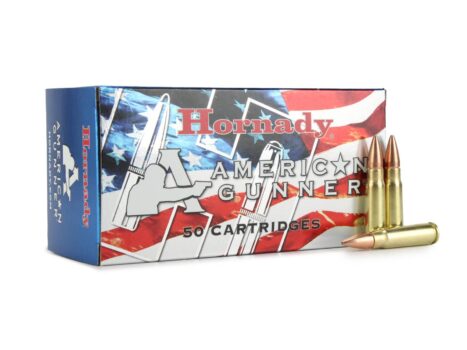
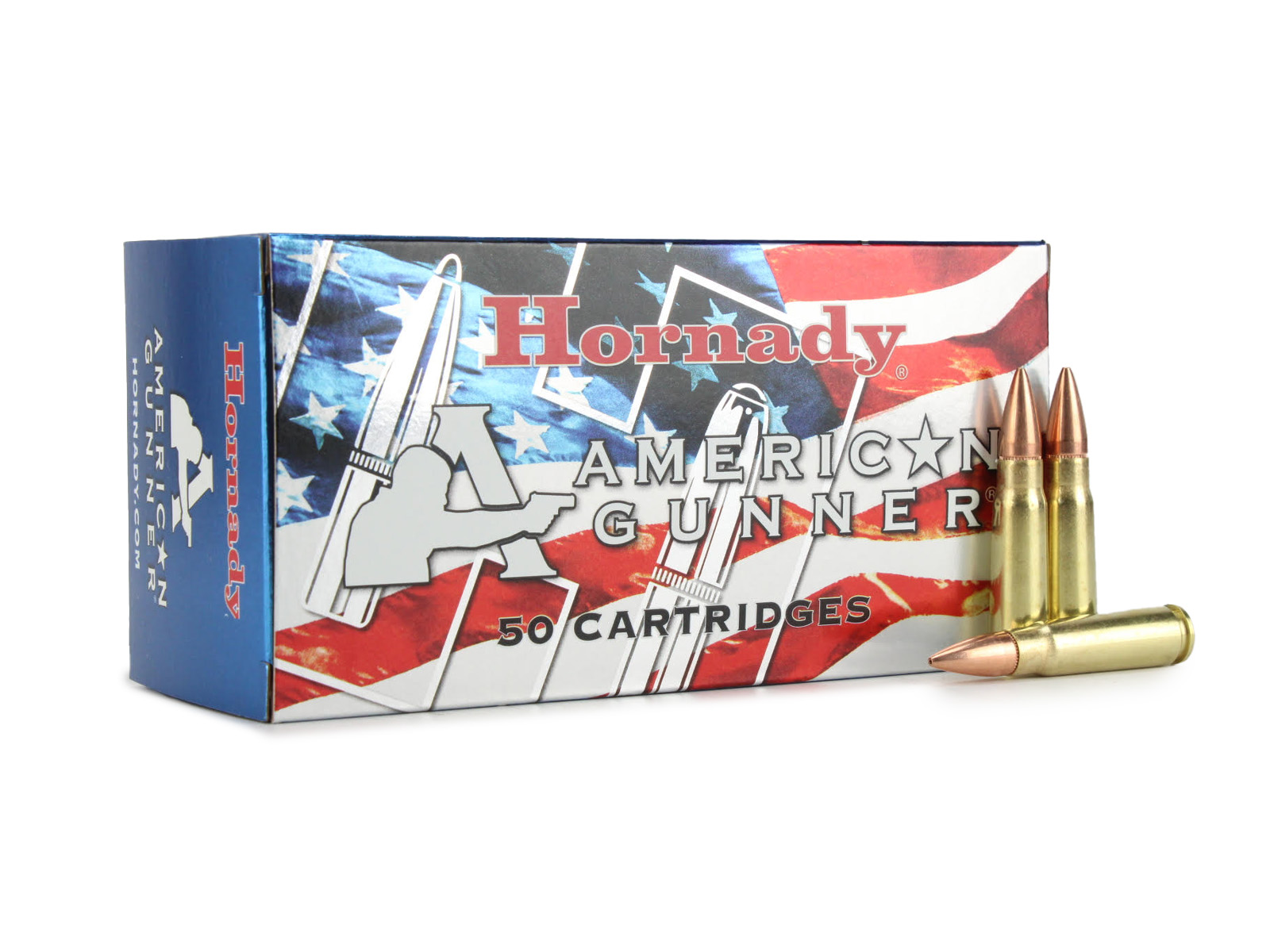
Hornady American Gunner 7.62×39 123 Gr BTHP
At a Glance
| Feature | Detail |
|---|---|
| Primary Use | Target shooting, range training, general-purpose centerfire rifle |
| Bullet Type | Boat Tail Hollow Point (BTHP) |
| Bullet Weight | 123 grains |
| Case Material | Brass (reloadable) |
| Primer Type | Boxer (centerfire) |
| Packaging | 50 rounds per box |
| Typical Price | $64.99/box · ~$1.30/round |
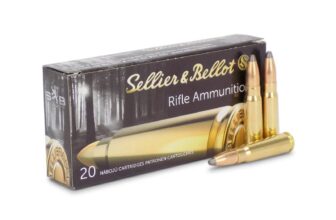
| Closest Competitors | Wolf Performance 7.62×39 123 Gr FMJ, Federal American Eagle 7.62×39 124 Gr FMJ, Sellier & Bellot 7.62×39 123 Gr FMJ |
Official Specs
| Spec | Value | Source |
|---|---|---|
| Muzzle Velocity (fps) | — | Not published |
| Muzzle Energy (ft-lbs) | — | Not published |
| Bullet Weight | 123 gr | Manufacturer |
| Bullet Type | Boat Tail Hollow Point (BTHP) | Manufacturer |
| BC G1 | — | Not published |
| BC G7 | — | Not published |
| Manufacturer SKU | — | Not published |
| UPC | — | Not published |
| Reloadable | Yes | Brass/Boxer construction |
Note: Hornady does not publish muzzle velocity, muzzle energy, or ballistic coefficient data for this specific American Gunner 7.62×39 123 Gr BTHP load on their product page or in publicly available technical documentation. The ballistics table below is calculated using a commonly referenced industry baseline velocity for 123-grain 7.62×39 loads (~2,350 fps from a 16" barrel) and a typical estimated G1 BC of 0.295 for a BTHP projectile of this weight class. All calculated values should be treated as approximations only. Community-submitted chronograph data will be incorporated as it becomes available.

Ballistics Table
Calculated estimate. Real-world results vary by barrel length, temperature,altitude, and lot. Community submissions will provide measured muzzlevelocity for comparison.
Zeroed at 100 yards. Sight height: 1.5" above bore. Assumed muzzle velocity: ~2,350 fps. Estimated G1 BC: ~0.295.
| Yards | ~Velocity (fps) | ~Energy (ft-lbs) | ~Trajectory (in) |
|---|---|---|---|
| 0 | ~2,350 | ~1,507 | -1.5 |
| 100 | ~2,097 | ~1,200 | 0.0 ← zero |
| 200 | ~1,860 | ~944 | -7.3 |
| 300 | ~1,641 | ~735 | -26.5 |
| 400 | ~1,442 | ~568 | -63.8 |
| 500 | ~1,267 | ~438 | -125.4 |
Key takeaway: At typical AK-platform engagement distances of 100–200 yards, this load retains sufficient velocity and energy for consistent performance on paper or steel. Beyond 300 yards, trajectory drop becomes significant — roughly 26 inches at that distance — making holdover compensation essential. The BTHP design offers a cleaner ballistic profile than standard FMJ projectiles at these ranges, but this cartridge is inherently a mid-range performer by design. Shooters expecting flat trajectories past 300 yards should consider a different caliber platform entirely.
The BTHP Bullet in 7.62×39 — What It Means for This Load
The Boat Tail Hollow Point is a bullet construction more commonly associated with precision rifle calibers like .308 Winchester or 6.5 Creedmoor. Its appearance in a 7.62×39 factory load is notable and worth explaining, because the context of the cartridge changes how the bullet behaves.
The boat tail base reduces base drag during flight, improving stability and extending the bullet’s effective accuracy range compared to a flat-base projectile. The hollow point cavity initiates consistent expansion upon impact, which is mechanically distinct from the steel-core or bi-metal FMJ projectiles that dominate the 7.62×39 market segment. Hornady’s American Gunner line was developed specifically to bring match-influenced bullet technology to high-volume, general-purpose shooting at accessible price points — this load is a direct expression of that philosophy.
One practical implication: BTHP bullets in 7.62×39 are subject to the same legal scrutiny as hollow point ammunition in jurisdictions that restrict expanding projectiles. Shooters should verify local laws before use, particularly for hunting applications where hollow point regulations vary by state and species.
Best Uses
Good fit:
- Range training and accuracy development with AK-pattern rifles or SKS platforms
- Situations where brass case and Boxer primer construction is preferred over steel-cased alternatives for case recovery
- Shooters transitioning from steel-cased FMJ who want improved consistency and a cleaner bullet profile
- General-purpose target shooting at distances of 100–200 yards where the BTHP design offers a marginal accuracy advantage over FMJ
Not the right tool for:
- High-volume training where per-round cost is the primary concern — steel-cased 7.62×39 FMJ options are significantly cheaper
- Long-range precision work beyond 300 yards, where the 7.62×39 cartridge itself becomes a limiting factor regardless of bullet design
- Hunting applications in states or jurisdictions where hollow point or expanding bullets are restricted for specific game
- Suppressors or semi-auto platforms with known feeding sensitivities to hollow point nose profiles — verify compatibility before relying on this load
Reliability Notes
No structured submissions yet.
Based on manufacturer claims and open-source product information, the American Gunner line is designed around consistency of powder charge and brass case concentricity as primary quality metrics. Hornady markets this line as using the same propellants and quality control standards applied to their premium lines, with cost reduction achieved through packaging and bullet design simplification rather than component downgrading. The BTHP projectile used here is described as providing uniform expansion characteristics, though no independent gel testing data for this specific 7.62×39 load is available in the public record at time of writing. Feeding reliability in AK-pattern semi-automatic rifles is not specifically addressed by the manufacturer for this load; community submissions will be incorporated as data becomes available. All notes above reflect manufacturer claims or open-source reporting, not structured field data.
Competitors
| Load | Weight | Bullet | BC G1 | Adv. Velocity | Price/box | Notes |
|---|---|---|---|---|---|---|
| Wolf Performance 7.62×39 123 Gr FMJ | 123 gr | FMJ (steel case) | ~0.275 | ~2,350 fps | ~$9–$12 | Budget alternative; steel case, non-reloadable |
| Federal American Eagle 7.62×39 124 Gr FMJ | 124 gr | FMJ (brass) | ~0.280 | ~2,350 fps | ~$19–$25 | Brass-cased budget alternative; no expansion |
| Sellier & Bellot 7.62×39 123 Gr FMJ | 123 gr | FMJ (brass) | ~0.272 | ~2,340 fps | ~$18–$22 | European brass FMJ; widely available |
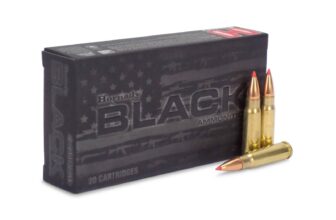
| Hornady Black 7.62×39 123 Gr SST | 123 gr | Super Shock Tip (SST) | ~0.300 | ~2,350 fps | ~$29–$35 | Same manufacturer; polymer-tipped, better BC |
| Fiocchi 7.62×39 123 Gr FMJ | 123 gr | FMJ (brass) | ~0.270 | ~2,350 fps | ~$20–$26 | Brass-cased; reliable feeding, no expansion |
| PPU 7.62×39 123 Gr SP | 123 gr | Soft Point (brass) | ~0.285 | ~2,410 fps | ~$22–$28 | Premium alternative for hunting; soft point expansion |
Note: The Hornady Black 7.62×39 123 Gr SST represents Hornady’s own premium alternative within the same caliber, featuring a polymer tip for improved BC and more controlled expansion. Buyers comparing within the Hornady lineup should weigh the SST’s performance advantages against the price difference. The Wolf and steel-cased options represent the dominant budget segment of this caliber but sacrifice reloadability and expansion characteristics.
Price Reality
- Typical retail range: $59.99–$69.99 per 50-round box; case pricing not widely published for this specific load
- Per-round cost: approximately $1.20–$1.40, depending on retailer and market conditions
- At ~$1.30/round, this load is significantly more expensive than steel-cased 7.62×39 FMJ, which typically runs $0.18–$0.30/round in volume
- Compared to Federal American Eagle 7.62×39 FMJ (~$0.38–$0.50/round in brass), the premium for a BTHP projectile is roughly 2.5–3x
- Compared to Hornady Black 7.62×39 SST (~$0.60–$0.70/round), this load is notably more expensive despite the Black line offering a more advanced bullet design
- Fair price benchmark: At current market rates, $64.99 for 50 rounds (~$1.30/round) sits at the high end for 7.62×39 brass-cased ammunition. Buyers who find this load above $70/box should shop alternatives unless availability is the primary constraint.
Prices change. Check the Where to Buy block for current listings.
Where to Buy
Hornady American Gunner 7.62x39 123 Gr BTHP (Box)
Affiliate links. These do not influence ratings, data, or any editorial content on this page.
FAQ
Is the Hornady American Gunner 7.62×39 BTHP suitable for hunting?The BTHP bullet design is capable of expansion on soft tissue targets, which is a functional advantage over FMJ for hunting applications. However, hunting legality for this projectile type varies significantly by state and target species — many states prohibit hollow point ammunition for deer or require minimum energy thresholds at point of impact. The 7.62×39 cartridge itself is also subject to debate in hunting contexts due to its energy retention at distance. Hunters should consult their state regulations and verify that the load meets any minimum caliber or bullet construction requirements before using it in the field.
How does the American Gunner BTHP compare to the Hornady Black 7.62×39 SST?Both loads originate from Hornady and share the same caliber and approximate bullet weight, but they represent meaningfully different engineering priorities. The Hornady Black line uses a Super Shock Tip (SST) polymer-tipped projectile with a higher published BC and more predictable expansion performance at a wider range of impact velocities. The American Gunner line is positioned as a higher-volume, more economical option that still delivers above-average consistency compared to steel-cased alternatives. For buyers who shoot frequently and prioritize cost management, the American Gunner is the more practical choice; for buyers who want maximum terminal performance, the Black SST is the stronger option within the same manufacturer’s catalog.
Will this ammunition feed reliably in AK-pattern semi-automatic rifles?The BTHP bullet profile features an open hollow point cavity at the nose, which can occasionally cause feeding issues in semi-automatic platforms that are optimized for the rounded ogive of FMJ ammunition. The degree of sensitivity varies significantly by rifle, magazine design, and feed ramp geometry. Most modern AK-pattern rifles with standard feed ramps handle BTHP ammunition without issue, but this is not universal. Shooters should function-test any new ammunition in their specific platform before relying on it, particularly for defensive or competition use.
Why is this load priced so much higher than other 7.62×39 options?The primary cost drivers are brass case construction, Boxer primer configuration, and the BTHP bullet itself — all of which cost more to produce than the steel-cased, Berdan-primed FMJ loads that dominate the 7.62×39 market. Steel-cased ammunition from Eastern European manufacturers benefits from decades of high-volume military production infrastructure that keeps per-unit costs extremely low. The American Gunner line is not competing on raw cost; it is competing on consistency, reloadability, and bullet performance for shooters who want a domestic, brass-cased option in this caliber.
Is the brass case from this load worth saving for reloading?The brass case and Boxer primer construction of this load make it technically reloadable, which is a meaningful advantage over the majority of 7.62×39 ammunition on the market. However, 7.62×39 reloading presents practical challenges: the cartridge headspaces on the case shoulder, and case life can vary depending on the chamber dimensions of AK-pattern rifles, which are often manufactured to looser tolerances than bolt-action platforms. Reloaders who already have 7.62×39 dies and experience with the cartridge will find these cases useful. This page covers factory ammunition only — for reloading-specific guidance, consult dedicated handloading references.