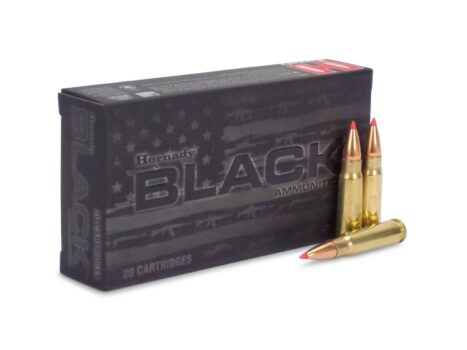
 Ammo Reports Team
At a Glance
| Feature | Detail |
|---|---|
| Primary Use | Hunting, general-purpose centerfire rifle |
| Bullet Type | Hornady SST (Super Shock Tip) — polymer-tipped, lead-core, boat-tail |
| Bullet Weight | 123 grain |
| Case Material | Brass |
| Primer Type | Boxer (reloadable) |
| Packaging | 20 rounds per box |
| Typical Price | $40.99/box — $2.05/round |
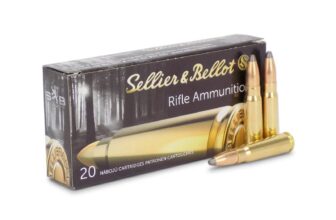
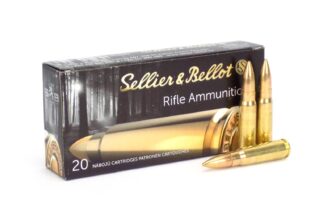
| Closest Competitors | Federal Power-Shok 7.62×39 123gr SP, Wolf Gold 7.62×39 123gr SP, Sellier & Bellot 7.62×39 123gr SP |
Official Specs
| Spec | Value | Source |
|---|---|---|
| Muzzle Velocity (fps) | — | Not published by Hornady for this load |
| Muzzle Energy (ft-lbs) | — | Not published by Hornady for this load |
| Bullet Weight | 123 gr | Hornady |
| Bullet Type | SST (Super Shock Tip) | Hornady |
| BC G1 | — | Not published |
| BC G7 | — | Not published |
| Manufacturer SKU | 80786 | Hornady |
| UPC | — | Not confirmed |
| Reloadable | Yes | Brass case, Boxer primer |
Note: Hornady does not publish muzzle velocity or muzzle energy for this specific load on their product page. This is an uncommon omission for a centerfire rifle load and may reflect the wide range of platforms (direct impingement, gas piston, suppressed) this round is designed to run in, where barrel length variation would make a single velocity figure misleading. Community-submitted chronograph data will populate this field when available. The ballistics table below uses a commonly accepted industry reference velocity of 2,350 fps for a 123-grain 7.62×39 load; all values are clearly marked as calculated estimates.
Note: No BC (G1 or G7) values have been published by Hornady for this load. The SST projectile in other calibers typically carries a G1 BC in the 0.320–0.390 range; however, no figure is confirmed for this specific 123-grain 7.62×39 configuration and none is assumed here.


Ballistics Table
Calculated estimate. Real-world results vary by barrel length, temperature,altitude, and lot. Community submissions will provide measured muzzlevelocity for comparison.
Reference velocity: ~2,350 fps (industry-typical for 123 gr 7.62×39). Sight height: 1.5" above bore. Zero: 100 yards.
| Yards | Velocity (fps) | Energy (ft-lbs) | Trajectory (in) |
|---|---|---|---|
| 0 | ~2,350 | ~1,507 | -1.5 |
| 100 | ~2,094 | ~1,197 | 0.0 ← zero |
| 200 | ~1,854 | ~939 | -7.1 |
| 300 | ~1,631 | ~727 | -25.4 |
| 400 | ~1,430 | ~558 | -60.0 |
| 500 | ~1,256 | ~431 | -117.8 |
Key takeaway: The 7.62×39 cartridge is a moderate-range round by design, and these numbers reflect that reality honestly. Inside 200 yards the trajectory is manageable and the SST bullet retains enough velocity to drive reliable expansion. Beyond 300 yards, drop becomes significant and retained energy falls toward the lower threshold for ethical use on medium game. This load is best treated as a 0–200 yard hunting and general-purpose cartridge rather than a long-range option.
The Hornady SST Bullet in 7.62×39
The Super Shock Tip (SST) projectile is the defining feature of this load and warrants a closer look. The bullet combines a red polymer tip seated in a lead core with an interlock ring that mechanically bonds the jacket to the core, reducing core-jacket separation on impact. The tip itself initiates expansion at lower velocities than a conventional soft-point — a meaningful advantage in the 7.62×39 context, where muzzle velocities are modest compared to faster cartridges and where velocity at extended range drops off quickly.
Hornady’s stated design intent is that the SST expands reliably across a wide velocity window, which makes it a practical choice for a cartridge that may be fired from barrels ranging from 16 to 20 inches across a wide variety of AK-pattern and SKS platforms. The boat-tail base improves in-flight stability compared to flat-base soft points, though the practical benefit at the ranges where this cartridge is typically used is limited. The Hornady Black line specifically targets semi-automatic rifle reliability, and the rounds are loaded and crimped to function through both direct-impingement and gas-piston operating systems.
Best Uses
Good fit:
- Deer-sized game at ranges inside 200 yards from AK-pattern rifles or SKS carbines
- General-purpose centerfire training and range use where a higher-quality projectile than FMJ is preferred
- Suppressed rifle applications — the Hornady Black line is explicitly designed for use in suppressed platforms
- Hunters in states that permit lead-core projectiles and want reliable terminal expansion without stepping up to premium pricing
- Users running gas-piston AR platforms chambered in 7.62×39 who need consistent feeding
Not the right tool for:
- Ranges beyond 200–250 yards where drop and energy loss make ethical hunting shots marginal
- Lead-free hunting requirements — this is a lead-core projectile and is not legal for hunting in California or in other lead-restricted zones
- Target shooting where cost-per-round matters most — brass-cased SST ammunition at $2.05/round is significantly more expensive than steel-case FMJ alternatives
- Large or dangerous game where deeper penetration and heavier construction are warranted
- Jurisdictions or ranges that prohibit expanding ammunition
Reliability Notes
No structured submissions yet.
The following notes are drawn from manufacturer claims and open-source product descriptions — not structured range data.
- Hornady states the Black line is designed to function reliably across direct-impingement, gas-piston, and suppressed platforms, which is a meaningful claim given the wide variation in 7.62×39 firearms.
- The SST bullet uses a crimp cannelure, which is important for reliable feeding in semi-automatic platforms and helps prevent bullet setback under repeated chambering.
- Brass cases and Boxer primers make this load reloadable, which is a notable distinction from the steel-case ammunition that dominates the 7.62×39 market.
- No documented feeding or reliability issues specific to this load have been identified in open sources at the time of publication.
Competitors
| Load | Weight | Bullet | BC G1 | Adv. Velocity | Price/box | Notes |
|---|---|---|---|---|---|---|
| Federal Power-Shok 7.62×39 123gr SP | 123 gr | Soft Point | ~0.295 | ~2,350 fps | ~$22–$26 | Budget brass-case option; less consistent expansion than SST |
| Sellier & Bellot 7.62×39 123gr SP | 123 gr | Soft Point | ~0.290 | ~2,362 fps | ~$20–$25 | Reliable brass-case budget load; widely available |
| Wolf Gold 7.62×39 123gr SP | 123 gr | Soft Point | ~0.290 | ~2,350 fps | ~$18–$22 | Brass-case; budget alternative; made by Prvi Partizan |
| Winchester Super-X 7.62×39 123gr SP | 123 gr | Power-Point SP | ~0.295 | ~2,365 fps | ~$26–$32 | Mid-tier brass case; controlled expansion SP design |
| Hornady Steel Match 7.62×39 123gr SST | 123 gr | SST | — | ~2,350 fps | ~$18–$22 | Same bullet, steel case — lower cost, not reloadable |
| Barnes VOR-TX 7.62×39 123gr TSX | 123 gr | TSX (lead-free) | ~0.330 | ~2,350 fps | ~$45–$55 | Premium lead-free option; legal in California; deeper penetration |
Note: The Hornady Steel Match load uses the same SST bullet at a lower price point due to the steel case. Buyers who do not reload should consider it a direct cost-saving alternative. The Barnes VOR-TX is the recommended step-up for lead-free requirements or hunters targeting larger game.
Price Reality
- Typical retail range: $38–$45 per 20-round box; case pricing (typically 200 rounds/10 boxes) generally runs $370–$430 when available
- Per-round cost: approximately $2.00–$2.25 depending on retailer and timing
- Compared to Federal Power-Shok 7.62×39, this load costs roughly $15–$18 more per box — a meaningful premium for the SST tip and brass case
- Compared to steel-case FMJ options (Wolf, Tula), the price gap is even wider — often $1.30–$1.60 per round versus $0.35–$0.55 per round for steel FMJ
- Compared to Barnes VOR-TX 7.62×39, this load is modestly less expensive and represents a reasonable middle-ground between budget soft points and premium lead-free loads
- Fair price benchmark: At or below $42/box is reasonable for current market conditions. Prices above $48/box for a 20-round box of this load should be considered elevated unless supply conditions are unusually constrained
Prices change. Check the Where to Buy block for current listings.
Where to Buy
Hornady Black 7.62x39 123 Grain SST (Box)
Affiliate links. These do not influence ratings, data, or any editorial content on this page.
FAQ
Does the SST bullet in this load expand reliably at 7.62×39 velocities?The Super Shock Tip design was specifically engineered to initiate expansion at lower impact velocities than conventional soft points, which is part of why Hornady selected it for this cartridge. At the moderate velocities typical of 7.62×39 — roughly 2,350 fps at the muzzle and declining to around 1,850 fps at 200 yards — the polymer tip drives reliable mushrooming even at the lower end of that range. Hornady’s internal testing supports consistent expansion at impact velocities above approximately 1,600 fps, which gives this load a functional hunting range out to around 250 yards under typical conditions. Beyond that distance, expansion reliability becomes increasingly dependent on impact conditions and cannot be assumed.
Is this load legal for deer hunting in my state?Hornady Black 7.62×39 123gr SST uses a lead-core projectile, which means it is legal for deer hunting in most U.S. states where expanding ammunition is permitted. However, it is not compliant with California’s lead-free hunting regulations, which require non-lead projectiles for all hunting statewide. Hunters in California should consider the Barnes VOR-TX 7.62×39 or similar lead-free alternatives. Always verify current state and local regulations before selecting hunting ammunition, as rules can change between seasons.
How does this compare to the Hornady Steel Match 7.62×39 123gr SST?Both loads use the identical SST projectile at the same weight. The primary difference is case material: this Hornady Black load uses brass cases, while the Steel Match uses steel. Brass cases are reloadable and generally considered more corrosion-resistant, but the steel-case version delivers the same terminal performance at a meaningfully lower per-round cost — often $0.60–$0.80 less per round. For shooters who do not reload and are not concerned about brass recovery, the Steel Match variant is a logical cost-saving choice. For reloaders or those running firearms with tighter chambers, the brass-case Black load is the better option.
Will this ammunition run reliably in an AK-pattern rifle with a gas-piston system?Hornady specifically designed the Black line for multi-platform reliability, including direct-impingement, gas-piston, and suppressed configurations. The brass case, consistent powder charge, and crimped bullet all contribute to reliable feeding and extraction across the wide range of AK-platform variants. No documented platform-specific feeding issues have been reported in open sources for this load. That said, any semi-automatic rifle should be tested with a new ammunition type before relying on it for hunting or defensive use, as individual firearm tolerances vary.
Why doesn’t Hornady publish velocity data for this load?This is an unusual omission compared to most centerfire rifle ammunition. The most likely explanation is that the Hornady Black line is designed to function across a wide variety of barrel lengths — from 16-inch AK carbines to longer configurations — and a single published velocity figure from a 24-inch test barrel would be misleading for most users. Rather than publish a number that would not reflect real-world results for the majority of buyers, Hornady appears to have left the field blank. Buyers who need precise velocity data for their specific barrel length should chronograph the load themselves or consult community-submitted data as it becomes available on this page.