 Ammo Reports Team
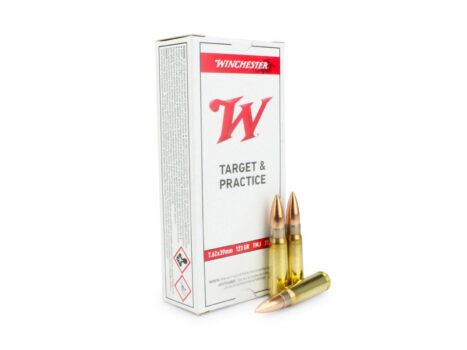
Winchester 7.62×39 123 Grain FMJ
At a Glance
| Field | Detail |
|---|---|
| Primary Use | Target shooting, range training, plinking |
| Bullet Type | Full Metal Jacket (lead core, copper-jacketed) |
| Bullet Weight | 123 grain |
| Case Material | Brass (reloadable) |
| Primer Type | Boxer (assumed; consistent with brass-cased USA White Box) |
| Packaging | 20 rounds per box |
| Typical Price | $21.99/box — $1.10/round |
| Closest Competitors | Wolf Military Classic 7.62×39 123gr FMJ, Hornady Black 7.62×39 123gr SST, Federal American Eagle 7.62×39 124gr FMJ |
Official Specs
| Spec | Value | Source |
|---|---|---|
| Muzzle Velocity (fps) | — | Not published |
| Muzzle Energy (ft-lbs) | — | Not published |
| Bullet Weight | 123 gr | Manufacturer |
| Bullet Type | Full Metal Jacket | Manufacturer |
| BC G1 | — | Not published |
| BC G7 | — | Not published |
| Manufacturer SKU | — | Not published |
| UPC | — | Not published |
| Reloadable | Yes | Manufacturer |
Note: Winchester does not publish muzzle velocity or muzzle energy for this specific USA White Box 7.62×39 load in available product data. The ballistics table below uses an industry-standard estimated velocity of 2,365 fps, which is consistent with published data for comparable 123-grain FMJ loads in this caliber from a 16-inch barrel. All calculated values are clearly labeled. Community-submitted chronograph data will be incorporated as it becomes available.


Ballistics Table
Calculated estimate. Real-world results vary by barrel length, temperature,altitude, and lot. Community submissions will provide measured muzzlevelocity for comparison.
Assumptions: 123 gr FMJ, G1 BC ≈ 0.295 (industry estimate for this bullet profile), muzzle velocity ≈ 2,365 fps, sight height 1.5" above bore, 100-yard zero, sea level, standard atmosphere.
| Yards | ~Velocity (fps) | ~Energy (ft-lbs) | ~Trajectory (in) |
|---|---|---|---|
| 0 | ~2,365 | ~1,528 | -1.5 |
| 100 | ~2,141 | ~1,252 | 0.0 ← zero |
| 200 | ~1,929 | ~1,017 | -7.1 |
| 300 | ~1,729 | ~817 | -25.4 |
| 400 | ~1,544 | ~651 | -58.6 |
| 500 | ~1,376 | ~517 | -111.3 |
Key takeaway: The 7.62×39 123-grain FMJ is a moderate-velocity cartridge that retains practical energy out to 300 yards for range work, but the trajectory arc becomes pronounced beyond that distance. At 200 yards, the bullet has already dropped roughly seven inches below line of sight, which means precise holds or dialed adjustments are necessary for anything past 150 yards. For its intended purpose — close-to-mid-range range training and plinking — the trajectory is entirely manageable. Shooters using AKM-pattern rifles with standard iron sights will find this load behaves exactly as those sights were designed to accommodate.
Best Uses
Good fit:
- High-volume range training and function testing of AK-pattern and SKS rifles
- Plinking and informal target shooting at distances of 25–200 yards
- Zeroing and familiarization sessions where brass-cased, reloadable ammunition is preferred over steel-cased alternatives
- Competitions or events that prohibit steel-case or bimetal-jacketed ammunition
- Shooters who collect and reload spent brass to reduce long-term cost
Not the right tool for:
- Hunting applications — FMJ construction does not expand and is prohibited or inadvisable for deer-sized game in most jurisdictions
- Long-range precision shooting beyond 300 yards, where trajectory management and wind drift become significant
- Situations where the lowest possible per-round cost is the primary driver — steel-cased alternatives are substantially cheaper per round
- Defense applications where terminal performance is a priority
Reliability Notes
No structured submissions yet.
Based on manufacturer claims and open-source product information, the following constructive observations are noted — all sourced from Winchester USA White Box product positioning and general user reporting, not structured test data:
- Winchester describes this line as manufactured to consistent quality standards, with newly manufactured brass cases rather than reprocessed or surplus components — a distinction that matters for case life and dimensional consistency.
- Brass-cased construction is reported to feed reliably in AK-pattern rifles that occasionally exhibit sensitivity to lacquer-coated steel cases in cold or high-volume-fire conditions.
- The Boxer-primed case design allows spent brass to be decapped and reloaded, which is not possible with Berdan-primed steel-case alternatives common in this caliber.
- No recall notices or safety advisories for this load are on record as of the publication of this page.
Competitors
| Load | Weight | Bullet | BC G1 | Adv. Velocity | Price/box | Notes |
|---|---|---|---|---|---|---|
| Wolf Military Classic 7.62×39 123gr FMJ | 123 gr | FMJ (bimetal jacket) | ~0.275 | ~2,396 fps | ~$9–$12 | Steel case; budget alternative; bimetal jacket may accelerate bore wear; not reloadable |
| Tula 7.62×39 122gr FMJ | 122 gr | FMJ (steel jacket) | ~0.270 | ~2,396 fps | ~$10–$13 | Steel case; lowest-cost option; not reloadable; range restrictions may apply |
| Federal American Eagle 7.62×39 124gr FMJ | 124 gr | FMJ (copper jacket) | ~0.295 | ~2,350 fps | ~$18–$22 | Brass case; direct competitor to this Winchester load; similar price tier |
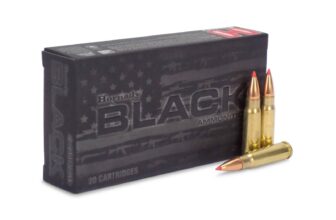
| Hornady Black 7.62×39 123gr SST | 123 gr | SST (polymer-tipped, expanding) | ~0.295 | ~2,350 fps | ~$28–$35 | Premium alternative; expanding bullet suitable for hunting where legal; significantly higher cost |
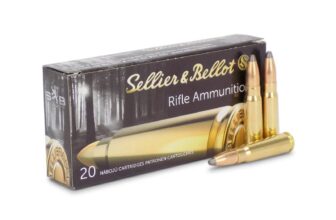
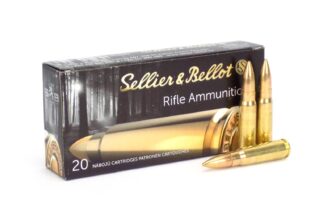
| Sellier & Bellot 7.62×39 123gr FMJ | 123 gr | FMJ | ~0.290 | ~2,411 fps | ~$17–$22 | Brass case; European manufacture; competitive pricing; Boxer primed |
| Brown Bear 7.62×39 123gr FMJ | 123 gr | FMJ (bimetal) | ~0.275 | ~2,396 fps | ~$11–$15 | Steel case; lacquer coated; budget tier; not reloadable |
Price Reality
- Typical retail price: $21.99 per 20-round box — approximately $1.10 per round
- Case pricing (typically 500 or 1,000 rounds) is not consistently listed for this SKU; bulk pricing availability varies by retailer and inventory cycle
- Steel-cased alternatives (Wolf, Tula, Brown Bear) typically run $0.45–$0.65 per round — roughly half the cost of this Winchester load
- Federal American Eagle 7.62×39 in brass case runs approximately $0.90–$1.10 per round, placing it in the same price tier
- Hornady Black 7.62×39 SST runs $1.40–$1.75 per round, representing the premium end of factory loads in this caliber
- Fair price benchmark: $21.99–$24.99 per box is a reasonable range for brass-cased, newly manufactured 7.62×39 FMJ. Prices above $27.00 per box for this load represent a premium that is difficult to justify unless steel-cased alternatives are unavailable or prohibited
Prices change. Check the Where to Buy block for current listings.
Where to Buy
Winchester 7.62x39 123 Grain FMJ (Box)
Affiliate links. These do not influence ratings, data, or any editorial content on this page.
FAQ
Is the Winchester USA White Box 7.62×39 123gr FMJ brass-cased, and does that matter for range use?Yes, this load uses newly manufactured brass cases with Boxer primers, which distinguishes it from the majority of budget 7.62×39 ammunition on the market, which uses steel cases. Many indoor ranges prohibit steel-cased or bimetal-jacketed ammunition due to fire risk and potential damage to rubber trap backstops. This Winchester load is appropriate for virtually all range environments that permit rifle calibers. The brass case also allows spent casings to be collected and reloaded, which can offset the higher per-round cost over time for shooters who handload.
Why is this load significantly more expensive than Wolf or Tula in the same caliber?The primary cost driver is case material. Steel-cased ammunition is cheaper to produce at scale, which is why Russian and Eastern European military-surplus-style loads undercut brass-cased options substantially. Winchester’s USA White Box line uses domestic or commercial-grade brass, Boxer primers, and manufacturing processes oriented toward dimensional consistency. Whether the price premium is worth it depends on your priorities: if you reload, shoot at a range that bans steel cases, or simply prefer brass-cased ammunition, the cost difference is justifiable. If cost-per-round is the sole criterion, steel-cased alternatives are the more economical choice.
Can this ammunition be used for hunting deer or hogs?No — and this applies to any FMJ load regardless of brand. Full Metal Jacket bullets are designed not to expand upon impact, which means they typically produce narrow wound channels insufficient for reliable ethical kills on medium or large game. Most U.S. states explicitly prohibit the use of non-expanding bullets for deer hunting. For hunting applications in 7.62×39, expanding loads such as the Hornady Black 123gr SST or soft-point options from Sellier & Bellot or Federal are the appropriate choices. This Winchester FMJ load is a range and training round only.
Does the FMJ bullet in this load have a bimetal jacket that will damage my barrel or set off range magnets?Winchester USA White Box 7.62×39 uses a copper-jacketed FMJ bullet, not a bimetal (steel-core or steel-jacket) construction. This means it will not trigger magnet tests used by many indoor ranges to screen for steel-jacketed or steel-core ammunition. It is also less likely to accelerate barrel wear compared to bimetal-jacketed alternatives. Shooters at ranges that use magnetic screening to enforce ammunition policies can use this load with confidence, unlike Wolf, Tula, or Brown Bear products in this caliber, which typically use bimetal jackets.
How does this Winchester load compare to Federal American Eagle 7.62×39 124gr FMJ?Both loads occupy the same market position: brass-cased, Boxer-primed, newly manufactured FMJ ammunition in the 123–124-grain weight range. Pricing is comparable, typically within a few dollars per box. The one-grain weight difference has no practical effect on trajectory or terminal performance at range distances. The primary reason to choose one over the other comes down to availability and brand preference. Federal American Eagle is manufactured at Federal’s Lake City-affiliated facilities and has a long track record in this caliber; Winchester’s USA White Box carries similar brand credibility. Either load is a sound choice for brass-cased range training in 7.62×39.